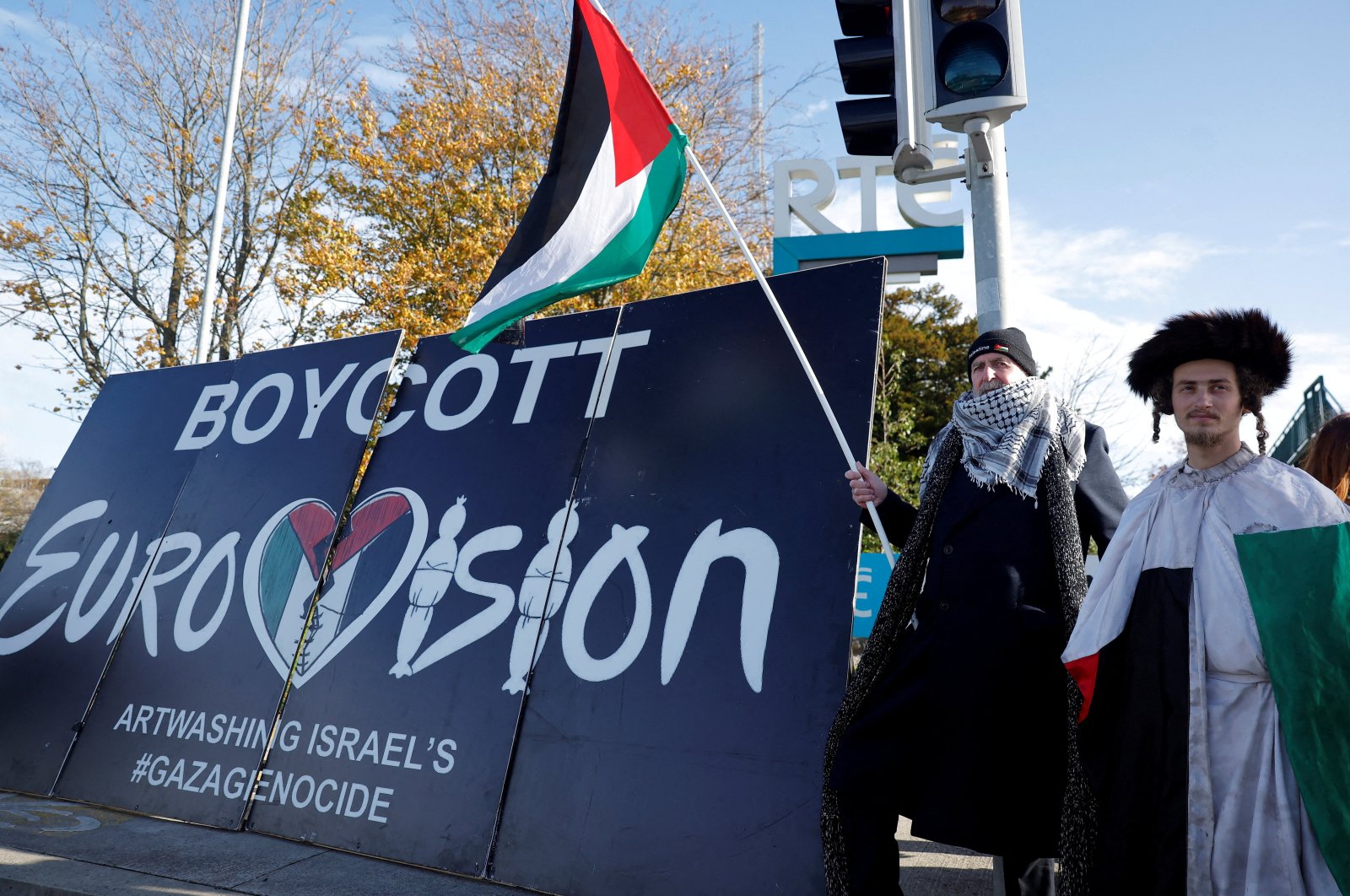
Broadcasters in Spain, Ireland, the Netherlands and Slovenia all announced they were boycotting Eurovision — the world’s largest live music competition — over Thursday’s decision to allow Israel’s participation.
Iceland said it was considering its position and would make a decision on December 10.
Widespread opposition to the war in Gaza had led to mounting calls for Israel to be excluded from the annual contest. There were suspicions, too, about the manipulation of the voting system to favour Israel at last year’s event.
“We estimate there’ll be about 35 broadcasters participating” in the May 2026 contest, the contest’s director Martin Green told public broadcaster Swedish Television late Thursday after the decision.
He said “about five” countries felt “very passionately” that Israel should not be allowed to participate, “and I have full respect for that.”
“I very much hope that those few broadcasters who feel they can’t be there next year will return back to us in 2027,” he added.
He stressed that the event should be apolitical, recalling: “It is not governments that participate in Eurovision, it is public service broadcasters and artists.”
At Thursday’s meeting, members of the European Broadcasting Union had a “full, frank, honest, and quite moving debate”, and “what they really came together on is a belief that Eurovision Song Contest shouldn’t be used as a political theatre,” he said.
“It must retain some sense of neutrality.”
po/rlp