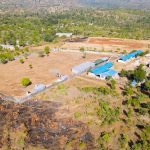
A legal dispute over the construction of the Ritz-Carlton Maasai Mara Safari Camp, located near the Kenya–Tanzania border, has taken another turn after the Environment and Land Court declined to allow the case to be withdrawn.

The petition was filed in August by environmental activist Meitamei Ole Dapash, who moved to court to stop the opening of the luxury camp. He claimed the facility was built along an important wildlife movement route connecting the Maasai Mara in Kenya and the Serengeti in Tanzania. He also questioned whether environmental safeguards were followed and whether nearby Maasai communities were properly consulted.
At the start of the dispute, Dapash, through the Institute for Maasai Education, Research and Conservation (MERC), formally wrote to Marriott International, the company behind the Ritz-Carlton brand. In the letter, he sought details on land leasing arrangements, approvals issued by the National Environment Management Authority (NEMA), and evidence of community engagement during the project’s planning and construction.
The Narok County Government dismissed the allegations, saying the camp was developed legally and operates under a valid lease. County officials maintained that the project complies with Kenyan law and the Maasai Mara management plan, and does not interfere with wildlife migration. They also pointed to employment opportunities, cultural tourism and community projects as part of the camp’s contribution to the local economy.
On Wednesday December 17th, Dapash sought to withdraw the case, informing the court that talks with the respondents had addressed the issues he had raised. However, the camp’s developer, Lazizi Mara Limited, opposed the request, arguing that the matter involved public interest issues and could not simply be dropped without judicial review.
In a ruling delivered on Thursday December 18th, Justice Lucy Gicheru rejected the withdrawal, stating that concerns touching on environmental protection, sustainable development and wildlife movement require a full hearing and a clear court decision. She said such matters go beyond private interests and cannot be abandoned midway without proper scrutiny, directing that the case should proceed to its conclusion.
The luxury camp has remained under public spotlight in recent months, particularly after online videos showed wildebeest struggling near the area. The Kenya Wildlife Service later dismissed the footage as misleading, saying the facility is located within a designated low-impact tourism zone.
The court is now expected to continue hearing the case as it determines whether the project meets Kenya’s environmental and legal requirements.