As Valentine’s Day on February 14 approaches, florists, gift shops, and social media timelines are once again awash with elaborate displays of affection.
Among the most eye-catching are the money bouquet: flower-like arrangements made from folded or rolled banknotes, often mixed with roses, ribbons, and glittering ornaments. The habit has become increasingly popular in Kenya.
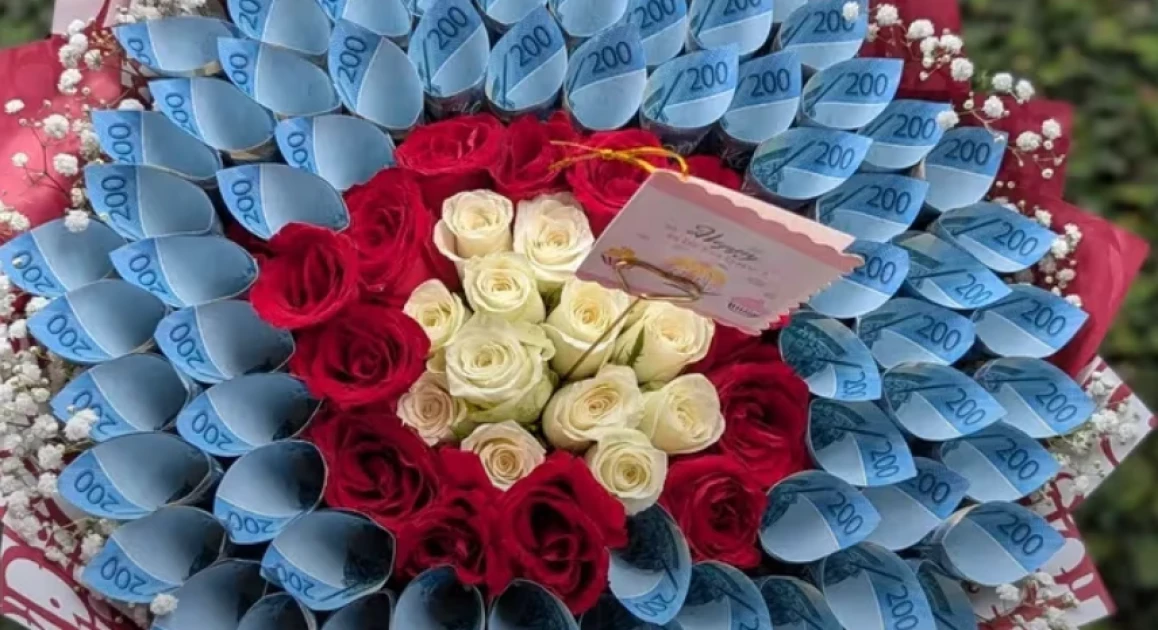
For many Kenyans, money bouquets have become a fashionable way of expressing love, generosity, or status during the Valentine season or somehow during parties such as birthdays or anniversaries.
But behind the glamour lies a less romantic reality — one that could put unsuspecting gift-givers on the wrong side of the law.
The Central Bank of Kenya (CBK) has issued a public warning cautioning citizens against using Kenya Shilling banknotes for decorative or celebratory purposes, including money bouquets.
The alert comes amid a rise in cases where cash is being incorporated into flower bouquets, ornamental displays and similar arrangements, particularly around Valentine’s Day.
According to the CBK, the process of creating money bouquets often involves folding, rolling, glueing, taping, stapling, or pinning banknotes. These actions, according to CBK, compromise the integrity of the currency and render it unfit for circulation.
“The use of adhesives, pins, staples and similar materials damages banknotes and interferes with the efficient operation of cash-handling and processing equipment, including automated teller machines, cash counting machines and sorting equipment,” the Bank warned in its notice.
While the CBK’s advisory may sound administrative, the consequences of ignoring it are firmly rooted in criminal law.
What the law says
The use — or misuse — of currency is regulated under Kenya’s Penal Code. Section 367A of the law criminalises the deliberate damage or defacement of currency notes.
“Any person who wilfully and without lawful authority or excuse defaces, tears, cuts or otherwise mutilates any currency note shall be guilty of an offence and shall be liable to imprisonment for a term not exceeding three months or to a fine not exceeding two thousand shillings or to both such imprisonment and fine,” the law states.
According to the CBK, damaged banknotes create operational and financial challenges for the country’s currency management system.
Once mutilated, notes often cannot be recirculated, forcing the Bank to withdraw and replace them at high cost to the taxpayer.
Damaged currency also disrupts automated systems such as ATMs and cash-sorting machines, leading to delays, machine malfunctions, and increased maintenance costs.
From a legal standpoint, the protection of currency goes beyond aesthetics.
Banknotes are legal tender, and their integrity underpins public confidence in the monetary system. Any act that undermines that integrity — that even in the name of celebration — is treated by law as a matter of public interest.
In practical terms, this means a person who knowingly staples or glues notes into a bouquet may still be culpable, even if they intended to impress a loved one rather than damage currency.
Money bouquets have gained traction in recent years, fuelled by social media trends, influencer culture, and competitive gifting.
Florists now routinely advertise cash bouquets alongside traditional floral arrangements, while customers request increasingly elaborate designs involving notes of various denominations.
However, the law cautions that commercialising the practice may expose both sellers and buyers to liability, particularly if the currency is visibly altered.
The CBK has clarified that giving cash as a gift is not prohibited. What is unlawful is the alteration of banknotes in a manner that damages them.
Simple alternatives — such as placing cash in envelopes, gift boxes, or cards — do not raise legal concerns and preserve the usability of the notes.
As Valentine’s Day draws near, authorities are urging Kenyans to express affection responsibly and within the confines of the law. What may appear to be a harmless or trendy gesture could carry legal consequences that far outweigh the intended romantic impact.
The CBK’s warning, backed by clear provisions of the Penal Code, serves as a reminder that currency is not just a personal possession but a regulated instrument of the State.
Legal experts say the wording of the provision is broad enough to cover popular practices associated with money bouquets, particularly where notes are altered in a way that affects their physical condition or usability.
Lawyer Danstan Omari says many people mistakenly assume that because the penalty appears modest, the offence itself is insignificant.
“Every money note and coin is printed under the authority of the State. Once you deliberately deface it — whether by tearing, stapling, gluing or cutting — you are interfering with public property,” Omari explained.
He warned that ignorance of the law would not shield offenders from prosecution, especially where the damage to currency is evident.
“Those who are likely to use bouquets of money, I have assured you the first time you will see the outside of a prison is May 15,” Omari remarked, referencing the possibility of a three-month jail term following Valentine’s Day on February 14, 2026.
Omari added that the risk is compounded by the fact that courts are allowed to impose both penalties provided for in law. “The Sh2,000 fine might not look like much, but what if the court gives you both the fine and a three-month prison sentence?” he posed.
In the end, while love may be priceless, the law is clear: Kenya Shilling banknotes are not decorative items.