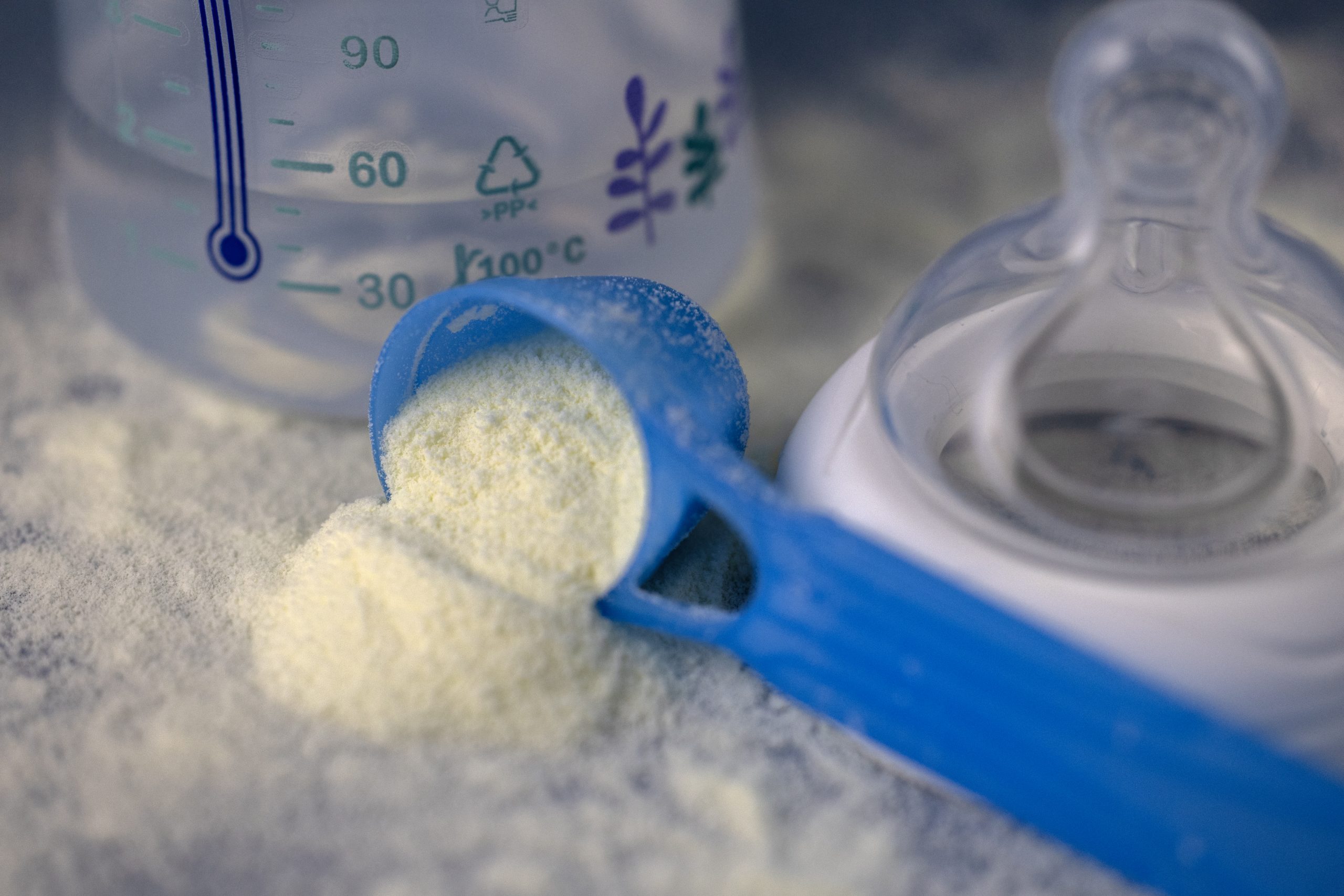
The EFSA said that a concentration of over 0.054 micrograms of cereulide per litre in infant formula or over 0.1 micrograms per litre in follow-on formula “may lead to safe levels being exceeded”.
“This advice is intended to help EU risk managers determine when products should be withdrawn from the market as a precautionary public health measure,” the Italy-based agency said in a statement.
It was not immediately clear whether the new advice would lead to further recalls.
Several manufacturers, including giants like Nestle, Danone and Lactalis have issued recalls of infant formula in more than 60 countries, including France, since December due to a risk of cereulide contamination.
Cereulide, a toxin produced by certain bacteria, is “likely to cause primarily digestive problems, such as vomiting or diarrhoea,” according to the French health ministry.
Two criminal investigations have already been opened in France following the deaths of two infants who consumed infant formula recalled by Nestle due to “possible contamination” by a bacterial substance.
The French health ministry said that no “causal link” has yet been established.
The European Food Safety Authority (EFSA) was tasked by the European Commission with establishing a standard for cereulide in children’s products.
dt/ar/rlp