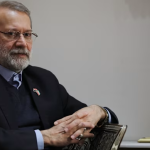
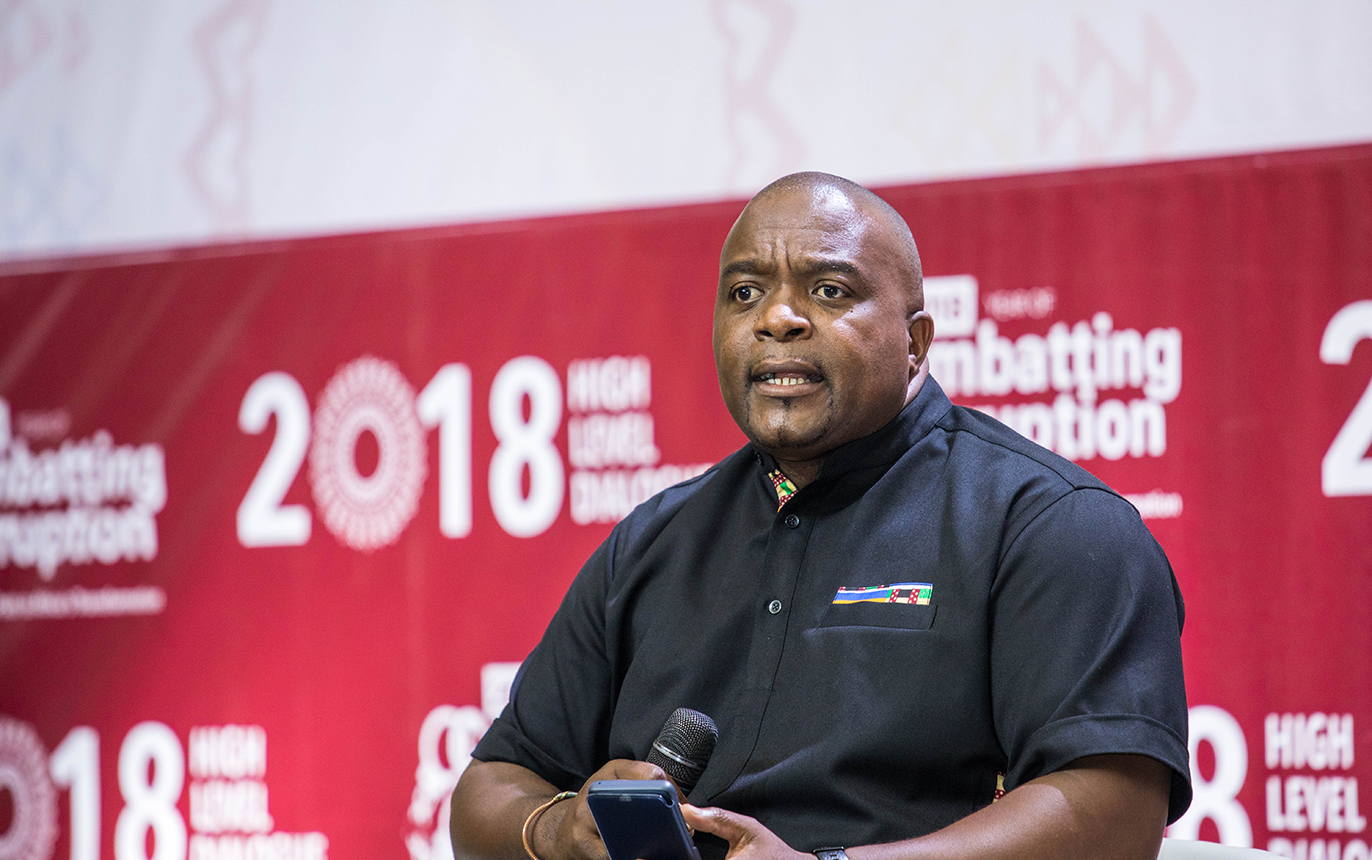
The Open Society Foundations have strongly condemned the detention and denial of entry of its Managing Director of Programmes, Brian Kagoro, by Kenyan authorities, saying no formal charges were presented and no written explanation was given.
Kagoro, a Zimbabwean constitutional lawyer and long-time Pan-African advocate, was held for more than 10 hours upon arrival at Jomo Kenyatta International Airport before being questioned by intelligence officers and placed on a return flight to Johannesburg.
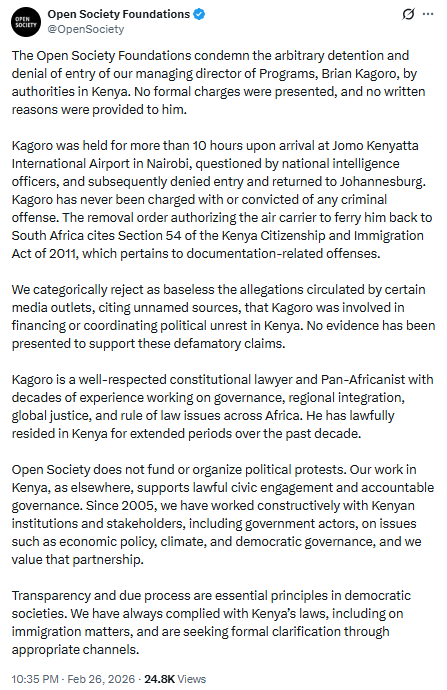
In a statement, Open Society said the removal order cited Section 54 of the Kenya Citizenship and Immigration Act, a provision that relates to documentation matters. The organization insisted that Kagoro has never been charged or convicted of any criminal offence.
The foundation also rejected reports linking him to financing or coordinating political unrest in Kenya, describing the allegations as baseless and unsupported by evidence.
“Transparency and due process are essential in democratic societies,” the foundation stated, adding that it has worked in Kenya since 2005 and has complied with local laws while supporting civic engagement, accountable governance and policy work in areas such as economic reform and climate.
A Wider Pattern of Abductions, Arrests and Detentions is Emerging
Kagoro’s ordeal is not the only one. Over the past year, activists across East Africa have faced abductions, deportations, arrests and prolonged detentions in circumstances that have alarmed civil society groups.
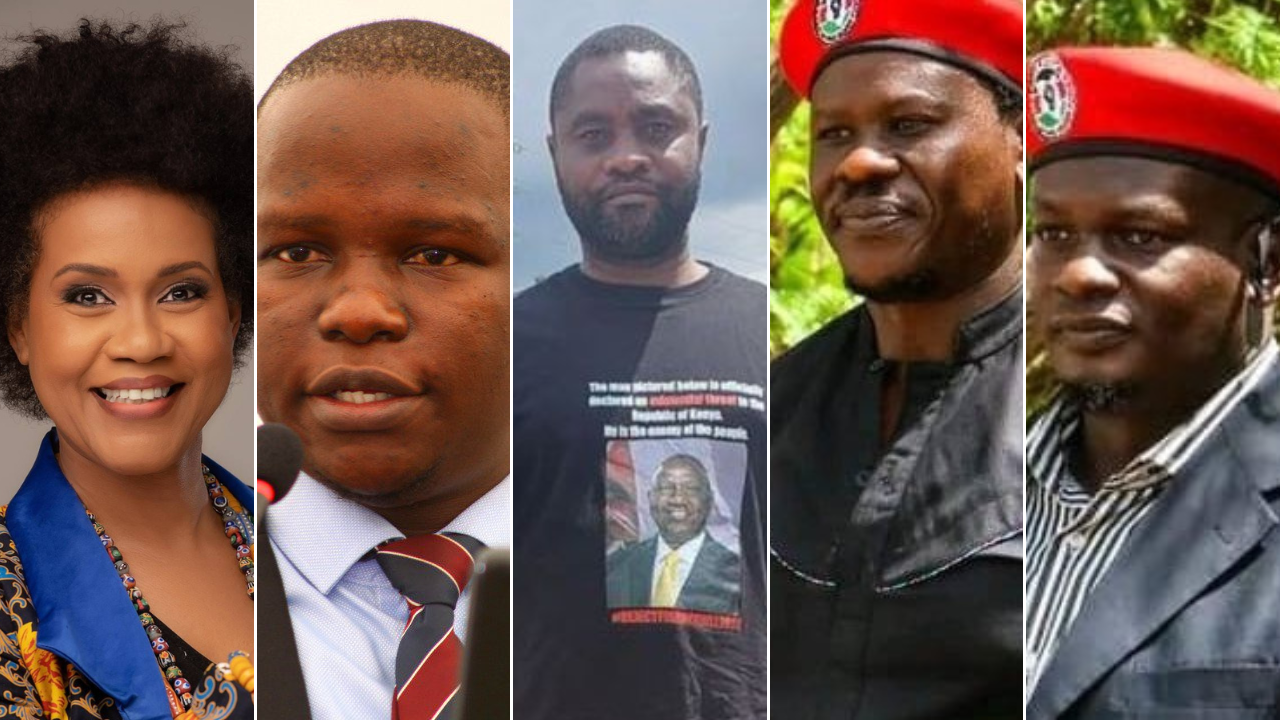
In January 2025, Tanzanian activist Maria Sarungi Tsehai was abducted in Nairobi by armed men before being released following public pressure. She later said she believed her activism had made her a target but vowed not to stop advocating for democratic reforms.
Months later, Kenyan activist Mwabili Mwagodi disappeared in Tanzania under unclear circumstances before being found abandoned in Kwale County. He later alleged torture during his detention. In February 2026, he was again arrested at the Lunga Lunga border over what officers described as a Red Notice and later charged with publishing false information. He was released on bond pending investigations.
Kenyan activists Bob Njagi and Nicholas Oyoo were also reportedly abducted in Uganda during opposition campaigns and later described being held in isolation for 38 days in what they called a secret detention facility.
More recently, in February 2026 Tanzanian activist Mshabaha Hamza was reportedly abducted in Kenya but rescued before being taken across the border, according to Amnesty International.
Beyond activists, other well-known opposition figures in East Africa have also faced prolonged legal battles and detention.
In Uganda, veteran political leader Dr. Kizza Besigye remains in custody months after his arrest in late 2024. His detention has drawn criticism from human rights groups who say the charges against him are unclear and that he has not been given timely access to a fair legal process. Supporters argue that keeping Besigye behind bars limits democratic space in Uganda.
In Tanzania, opposition leader Tundu Lissu continues to deal with legal cases that have kept him from fully participating in politics. Although he has challenged the charges against him, his situation remains unresolved, with supporters saying the proceedings have dragged on and affected his work as a political voice.
Rights groups say the treatment of both activists and opposition leaders underlines broader concerns about diminishing freedom of expression and civic space in the region.
Open Society has emphasized that it does not fund or organize political protests and that its work supports lawful civic engagement. It said it is seeking formal clarification from Kenyan authorities regarding Kagoro’s removal.
Rights defenders argue that the repeated use of immigration processes, security alerts and unclear warrants against activists risks weakening constitutional protections.
Kenya has historically been seen as a safe space for exiled activists and regional human rights defenders. However, recent events have raised questions about whether that space is shrinking.
As investigations continue in several of these cases, civil society organizations say they will keep pushing for transparency and accountability, warning that the protection of activists is central to protecting democracy itself.