As the government prepares to review the performance of its ten-point agenda next month, Kisumu Woman Representative Ruth Odinga has urged leaders to confront the reality of its implementation, saying many promises remain unmet nearly a year after its adoption.
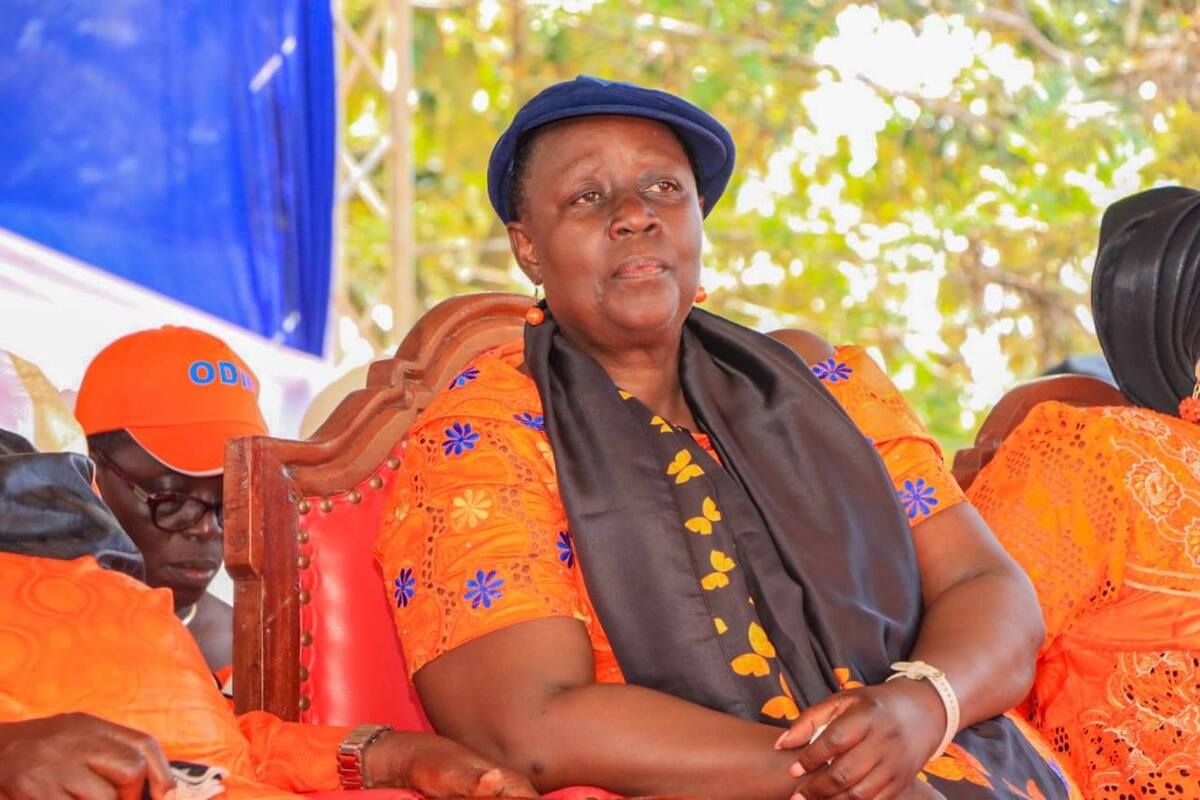
In a statement issued on Tuesday, February 3, Ruth said the agenda, which forms the backbone of Kenya’s broad-based government, has not delivered uniformly, leaving many citizens dissatisfied with the pace and depth of reforms since March 2025.
She said the upcoming March assessment should not be treated as a routine exercise but as an opportunity for honest reflection on whether the commitments made to Kenyans are being honoured.
“As we approach March, the month slated for the review of the ten-point agenda’s implementation, it is important that we evaluate the progress made since March 2025. This agenda serves as the very foundation of the broad-based government,” she said.
Ruth stressed that the ten-point agenda cannot be separated from the implementation of the National Dialogue Committee report, which she described as central to restoring public trust.
“We must pursue the 10-point agenda, which includes the implementation of the National Dialogue Committee (NADCO) Report. On Electoral Justice, the Report proposed a 9-member panel to reconstitute the IEBC, which has since been achieved.”
She acknowledged that the formation of the nine-member panel to reconstitute the Independent Electoral and Boundaries Commission marked progress under the NADCO proposals.
However, she said several other recommendations remain pending, including an independent audit of the 2022 presidential election and the creation of a legal framework to guide future reviews of electoral boundaries.
Ruth also highlighted the failure to compensate victims of state violence during protests, saying the matter remains one of the most painful and unresolved aspects of the reform agenda.
She said the protection of the right to peaceful assembly and justice for victims of rights violations were core principles long championed by former Prime Minister Raila Odinga.
According to her, the Kenya National Commission on Human Rights is mandated to develop a compensation framework, but no victim has been compensated so far, a delay she linked to the absence of political commitment.
She questioned whether the work undertaken by the Panel of Experts on Compensation of Victims of Demonstrations and Public Protests would finally translate into action.
Ruth also took issue with claims by some individuals who allege they held private discussions with Raila Odinga on political matters, saying such claims misrepresent his beliefs.
She said Raila Odinga’s political values were clearly outlined in the ten-point agenda and were well known to those who worked closely with him.
“Those claiming that Raila Odinga told them this and that should speak about the values he believed in, which were well captured in the ten-point agenda, whose implementation success remains a subject of debate, with many Kenyans not satisfied. Raila Odinga was not a gossiper,” she added.
While affirming that she supports dialogue ahead of the 2027 General Election, Ruth said questioning the implementation of agreed reforms should not be mistaken for opposition to talks.
“Like I have always said, I am not against negotiations ahead of the 2027 elections, and it is sad that any divergent opinion is misconstrued to mean this. But that should not stop us from asking questions, particularly around the ten-point agenda that was the basis for the broad-based government.”
On governance matters, she said some proposals contained in the NADCO report may face constitutional and legal challenges, particularly those seeking to establish new offices such as the Office of the Leader of the Official Opposition and the Office of the Prime Minister.
She noted that such proposals raise questions under Kenya’s presidential system as provided for in the 2010 Constitution, adding that similar concerns apply to proposals aimed at addressing the one-third gender rule.
Ruth further called for closer examination of inclusivity in public appointments and budget allocations, the safeguarding of devolution, and greater economic investment in young people, pointing to the NYOTA programme as a positive development.
She also urged leaders to refocus on integrity, responsible leadership and restraint in public spending.
Other areas she said require urgent attention include a review of the national debt and its use, tackling corruption, ending waste of public resources, and protecting constitutionalism, the rule of law, press freedom and the sovereignty of the people, including stopping abductions.
She said the March review should serve as a turning point for the government to show real progress and rebuild confidence in the reform agenda