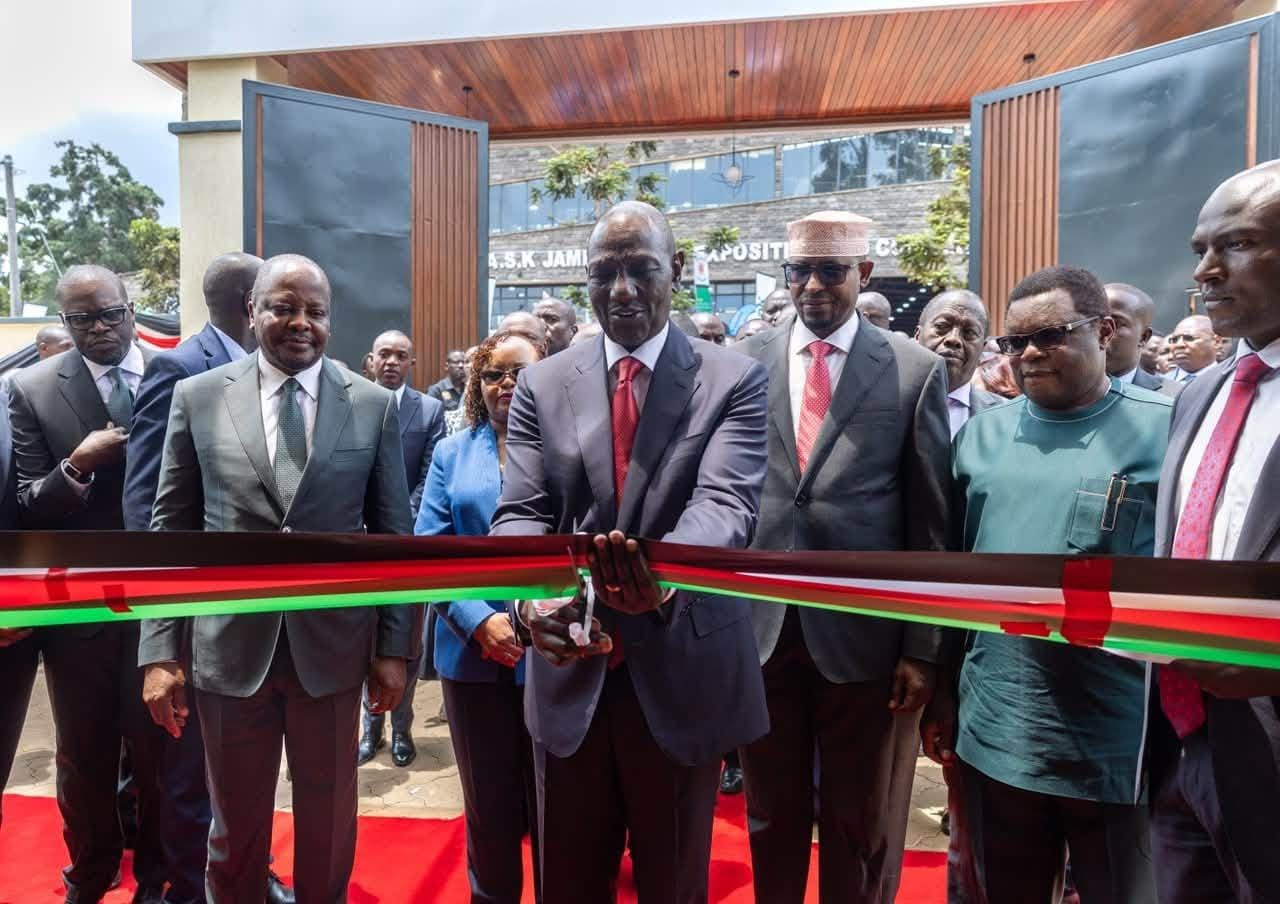
President William Ruto’s state visit to Tanzania on May 5, has produced a series of cooperation deals and renewed commitments between Nairobi and Dar es Salaam but not without raising eyebrows both diplomatically and politically. One of the agenda’s of the visit was a push to deepen ties between Kenya and Tanzania, with the two leaders overseeing the signing of multiple agreements covering energy, transport, trade, tourism and security. Both sides also committed to remove long-standing trade barriers by June 30, in a move aimed at easing cross-border business.

During the joint press briefing, Tanzanian President Samia Suluhu Hassan openly questioned Ruto over his earlier announcement about plans for an oil refinery in Tanga, saying she had not been informed beforehand. “I pressed him on it and asked, you went and announced a refinery in Tanga, how come I was not aware?” she said, leaving Ruto to explain the remarks himself.
Ruto responded by saying the refinery idea was still part of ongoing talks and had not been agreed on yet. He said such projects would be discussed and handled together with Tanzania. He also tried to ease the moment, saying both countries should focus on working together and avoid mistrust. “We need each other, the sooner we realize that the better, so we avoid unnecessary suspicion between our countries,” he said.
Beyond that exchange, both leaders pointed to ongoing efforts to deepen cooperation in the region. This includes plans to improve railway connections linking Tanzania and Kenya, as well as discussions around energy projects such as a possible gas pipeline between Dar es Salaam and Mombasa. There was also a strong focus on border security, with the two sides agreeing to step up coordination to prevent cross-border crime.

Despite the show of unity, the visit has drawn criticism from a section of Kenyan leaders under the Linda Mwananchi group. In a statement, the group questioned the timing and purpose of the visit, arguing that President Ruto’s planned address to the Tanzanian Parliament could be seen as backing a government that has faced criticism over its democratic record, especially after the 2025 elections.
They also called for clarity on what the visit means for ordinary Kenyans, saying the government should focus more on issues such as the cost of living, unemployment and public trust. Both governments have still maintained that the visit is about strengthening regional cooperation under the East African Community, with a focus on trade, infrastructure and shared growth.