Uganda on Thursday suspended all public transport to the Democratic Republic of Congo, where a deadly Ebola outbreak was spreading.
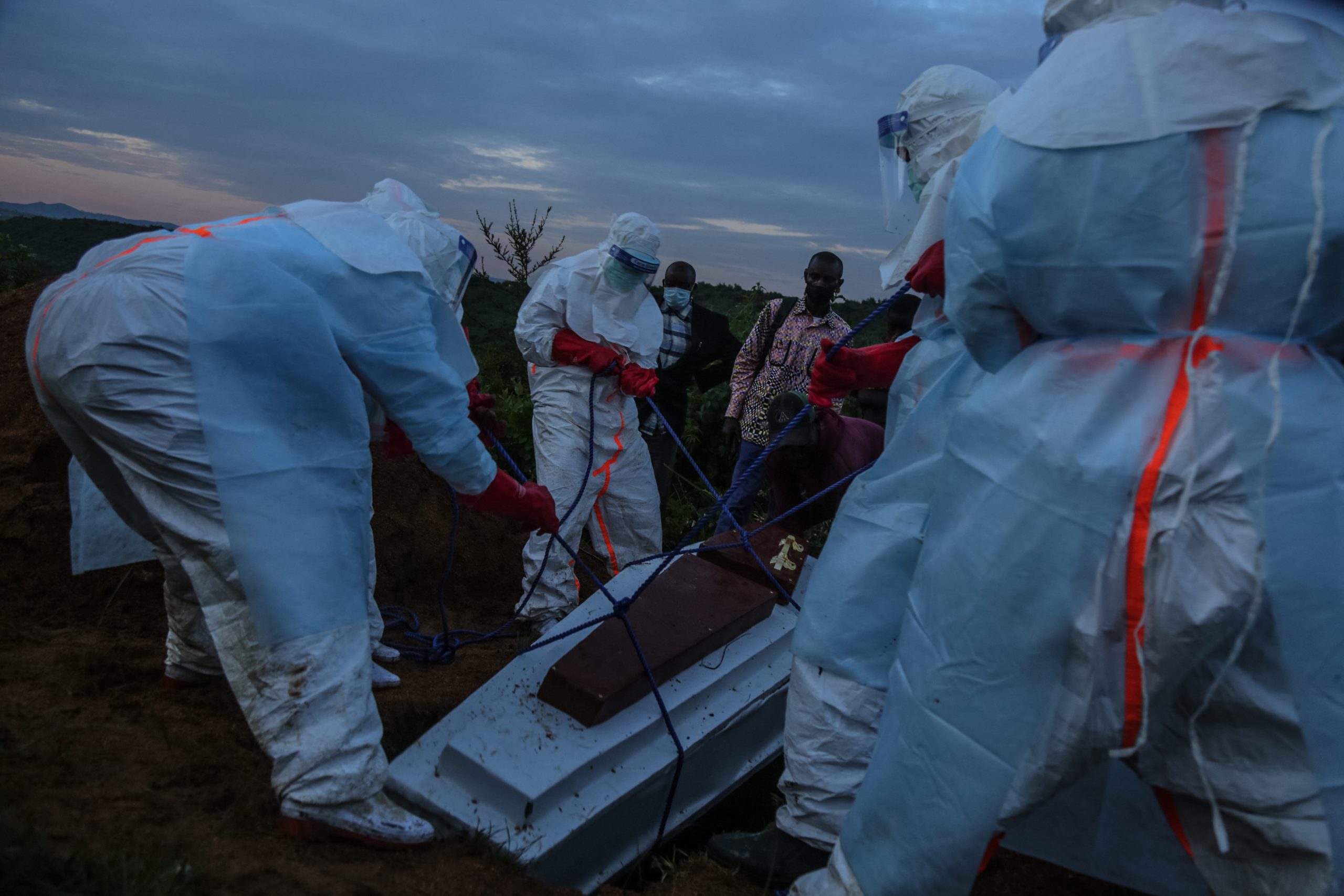
Many of the cases have been recorded in the epidemic’s epicentre in the DRC’s northeastern Ituri province, many in hard-to-access areas plagued by the Congolese east’s litany of armed groups. (Photo by Seros MUYISA / AFP)
Uganda later reported two suspected Ebola cases — one infection and one death — involving Congolese nationals who crossed the border.
But it said there were currently no active Ebola cases, with a previously suspected case testing negative twice.
All public transport, including ferries and cross-border buses, has been suspended for four weeks, the health ministry said in a statement, although cargo and food transport are exempt.
All flights to the DRC have also been temporarily halted, with the measure set to take effect within 48 hours.
“Given Uganda’s proximity to the epicentre and strong cross-border linkages… the risk of further importation remains high,” health ministry permanent secretary Diana Atwine said in the statement.
The virus is suspected to have claimed 160 lives out of nearly 671 probable cases in the neighbouring DRC, according to figures published by the National Institute for Public Health (INSP) on Thursday.
The World Health Organization has declared the latest deadly outbreak an international emergency.
In response, the United States earlier this week stepped up screening of air passengers coming from the DRC, Uganda and South Sudan, while Bahrain announced a month-long ban on visitors from the three countries.
No vaccine or clinical treatment exists for the Bundibugyo strain of the Ebola virus responsible for the current epidemic.