A federal grand jury in Virginia has indicted four men from four countries for allegedly conspiring to supply Mexico’s Jalisco New Generation Cartel (CJNG) with military-grade weapons, including AK-47s, rocket launchers, and anti-aircraft guns, in exchange for profits from cocaine smuggling into the United States. The 16-page indictment, unsealed April 10, 2025, marks one of the first major prosecutions under the U.S. government’s February 2025 designation of CJNG as a Foreign Terrorist Organization.
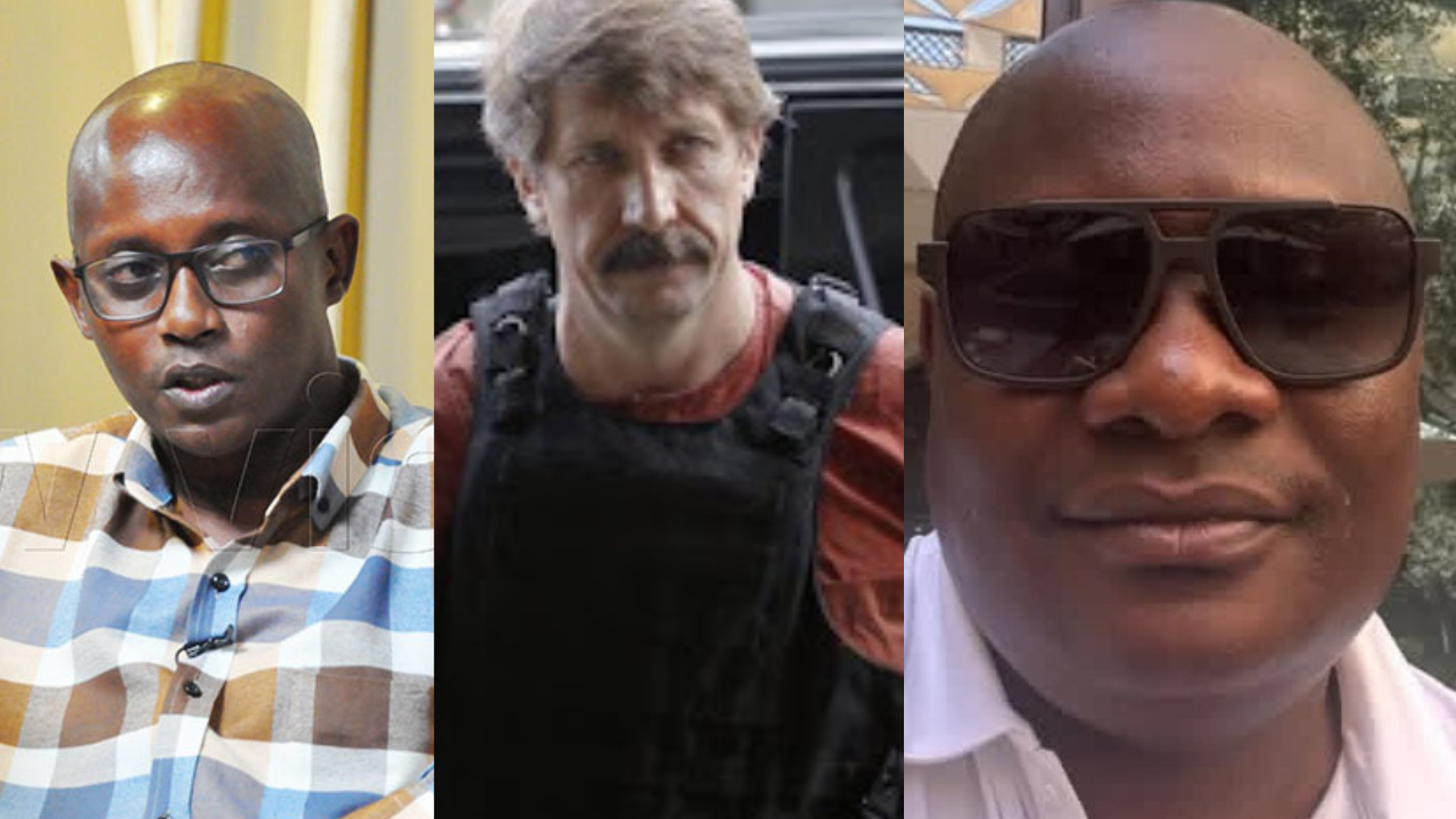
The accused charged in U.S. District Court for the Eastern District of Virginia are: Peter Dimitrov Mirchev, 57, a Bulgarian national described as a career international arms dealer, Elisha Odhiambo Asumo, a Kenyan national accused of brokering fake government paperwork; Michael Katungi Mpeirwe, a Ugandan national and current policy advisor to Uganda’s government, and Subiro Osmund Mwapinga, a Tanzanian national. All four face three felony counts that could result in life sentences if convicted.
According to the indictment, the conspiracy began in September 2022 and continued through April 2025. Mirchev, the alleged ringleader, met with individuals claiming to represent CJNG and agreed to arrange illegal shipments of military weapons while “avoiding detection by international and U.S. law enforcement”.
The weapons discussed included machineguns, rocket-propelled grenades, grenades, night vision equipment, sniper rifles, anti-personnel mines, surface-to-air missiles, anti-aircraft drones, and ZU-23 anti-aircraft guns capable of shooting down helicopters. Mirchev provided an “Arms Brochure” advertising tanks, drones, air defense systems, and armored vehicles.
The defendants allegedly knew CJNG would use these weapons to protect “large, multi-kilogram shipments of cocaine into the United States”. Prosecutors charge them under section 21 U.S.C. §963 with conspiring to distribute 5+ kilograms of cocaine, knowing it would be imported unlawfully.
A second count charges conspiracy to possess firearms, including machineguns and destructive devices, in furtherance of that drug trafficking crime, under section 18 U.S.C. §924(o).
Fake documents
To move weapons legally, arms deals require End-User Certificates (EUCs) and Delivery Verification Protocols (DVPs) that certify the buyer and final destination. The indictment alleges the four men corrupted that system.
Mirchev recruited Asumo to obtain fraudulent EUCs from African states. Asumo then brought in Mpeirwe, who recruited Mwapinga. Together, they allegedly secured an EUC from Tanzania’s Ministry of Defence authorizing 50 AK-47s “for the Sole use of” the Tanzanian military. The document also certified that the rifles would not be re-exported without Bulgaria’s permission. Prosecutors say the rifles were actually destined for CJNG.
Financial records cited in the indictment show the paper trail was paid as follows: in October 2022, $5,000 was wired from a U.S. bank to Asumo’s Kenyan account as an initial payment for the fake EUC. In December 2022, $30,000 wired to the same account as the bulk fee, and in November 2023, $37,977.53 wired from the U.S. to a Bulgarian arms manufacturer tied to Mirchev for the first shipment
In July 2024, Mirchev exported 50 AK-47s with magazines and ammunition from Bulgaria. After U.S./international authorities seized shipping container HELU2821406, Asumo allegedly produced a false DVP purportedly signed by Tanzania’s Permanent Secretary for Defence, claiming the military had received the weapons.
AK-47s and anti-aircraft systems
The scheme allegedly escalated. By October 2024, Mirchev discussed supplying CJNG with surface-to-air missiles, anti-aircraft drones, and ZU-23 systems that “automatically track targets” and fire “high-explosive” rounds that “could put down helicopters”.
He then compiled a proposed arms list for CJNG worth €53.7 million, about $58 million USD. The list included 2,000 AK-47s, 60 PKM machineguns, 68 RPG-7 launchers, 20 multiple grenade launchers, 4 ZU-23 guns, 9 million rounds of ammunition, drones, night vision, and anti-drone equipment. Asumo, Mpeirwe, and Mwapinga allegedly agreed to provide additional falsified documents to conceal the true end user.
During meetings in Cape Town in March 2023, Asumo and Mwapinga allegedly discussed creating a “paper trail” and using East Africa as a cocaine transshipment point. In April 2024, Mpeirwe met in London and offered to use his Ugandan government connections to secure more EUCs for future deals, in exchange for a 2% commission. Mpeirwe, according to the indictment, previously served as Deputy Head of Mission for the Uganda High Commission and as a security logistics officer with the African Union Commission.
Support for a terrorist group
The case took on new legal weight on Feb 20, 2025, when the U.S. Secretary of State designated CJNG as a Foreign Terrorist Organization under the Immigration and Nationality Act, and as a Specially Designated Global Terrorist under Executive Order 13224.
After that date, the defendants are accused of continuing to conspire to provide CJNG with “material support or resources… namely, weapons, including firearms and destructive devices, and false documentation”. That third count, under 18 U.S.C. §2339B, treats CJNG the same as groups like ISIS or Al-Qaeda for prosecution purposes and carries up to 20 years per violation.
Prosecutors allege the men acted “with the intent to assist the CJNG in protecting and furthering its prolific drug trafficking” and “with the knowledge and intent to aid and abet cocaine trafficking into the United States”.
Transnational Criminal Organizations
The grand jury’s “General Allegations” section describes CJNG as “one of Mexico’s most violent and prolific transnational criminal organizations”, formed around 2011 and now operating in South/Central America, Europe, Asia, Africa, Australia, and throughout the U.S. Its primary business is trafficking cocaine, fentanyl, and methamphetamine, sourcing cocaine from Colombia, Peru, and Bolivia.
The indictment notes CJNG uses “fear, bribery, violence, and intimidation” against communities, journalists, rivals, and Mexican security forces. It has attacked military convoys, helicopters, and officials through assassinations. The U.S. is described as “the largest consumer of the cocaine that the CJNG imports to Mexico”, generating “billions of dollars in profits”.
Forfeiture and jurisdiction
The government seeks forfeiture of all proceeds and property tied to the offenses, including the 50 AK-47s seized in container HELU2821406. At least one defendant is expected to be “brought first to and arrested in the Eastern District of Virginia”, giving the court jurisdiction over a conspiracy that began overseas.
The case is being prosecuted by Mr. Anthony T. Aminoff and Edgardo J. Rodriguez, who are Assistant U.S. Attorneys, and U.S. Attorney Erik S. Siebert.
U.S. priorities
Legal experts say the indictment highlights three converging U.S. priorities: stopping fentanyl/cocaine flows, preventing military weapons from reaching cartels, and using terrorism tools against transnational criminal groups. By charging material support after CJNG’s FTO designation, prosecutors can pursue tougher sentences and broader evidence rules. The accused are presumed innocent unless proven guilty.