The Commonwealth has urged the Tanzanian government to find a political and legal solution to the case facing Chadema Chairman and opposition leader Tundu Lissu.
This is in accordance with recommendations submitted to the community by former Malawian president and special envoy to the community, Lazarus Chakwera.
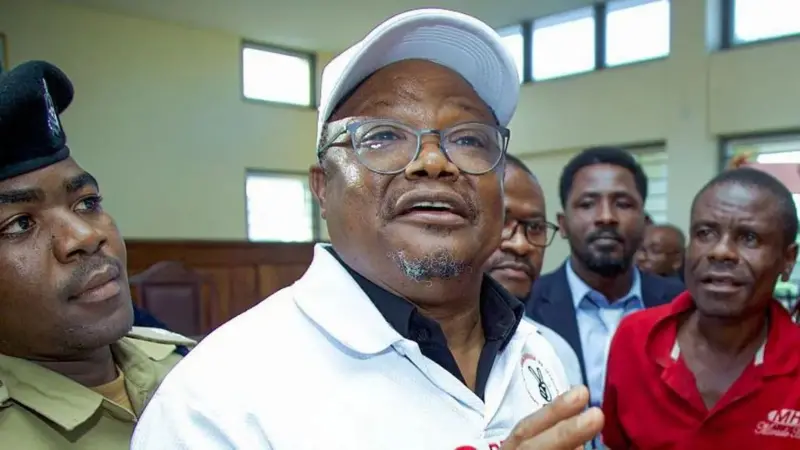
Chakwera was appointed to mediate political tensions and facilitate national dialogue following the controversial October 2025 general elections, which led to widespread protests.
Tundu Lissu was arrested following a political rally in Mbinga, Tanzania, where he called for major electoral and constitutional reforms.
The government accused him of treason and publishing false information online, claiming that his “No Reform, No Election” campaign incited public rebellion.
In his ongoing trial that has been postponed several times, Lissu requested to represent himself after his legal team claimed they were denied the opportunity to communicate with him privately and thus withdrew from the case.
However, the Tanzanian government has been insisting that the case facing Lissu is not politically motivated and that the court is independent in hearing it.
In addition, the Community’s recommendations have called on the government to release all those arrested during the riots for peacefully fighting for their rights.
Human rights organizations and lawyers reported that a large number of people were brought to court in early November and during the election period facing serious charges.
Chakwera’s report also called on the government of President Samia Suluhu Hassan to restore all digital systems within sixty days and refrain from issuing threats to media and freedom of expression defenders.
During the contested October 2025 elections, the Tanzanian government deployed troops and police to violently suppress protests, shut down the internet, and imposed curfews in major cities.
Authorities arrested hundreds of people—including key opposition figures—on charges of treason, with an official investigation later reporting hundreds of deaths.
The international community condemned the election, citing a flawed democratic process and the severe violence that followed the election.
The AU election observer mission declared that the vote did not meet democratic standards, with ballot box stuffing, internet blackouts, and politically motivated kidnappings affecting the integrity of the election.
Changes to the electoral system
The proposals also called on the Tanzanian government to establish a non-partisan platform of political parties within ninety days to focus on changes to the electoral system, political competition, arrests, and accountability.
The association has called on the Tanzanian government to immediately initiate an independent investigation into the crimes committed as recommended by the Commission of Inquiry, including issues such as compensation for victims.
It added that it will convene an extraordinary session in September 2026 where Tanzania will be invited to report on the steps it has taken prior to the meeting.
The recommendations also call on the Secretary-General to continue to communicate with the Tanzanian government to report on further steps taken.
Election violence
The severe unrest surrounding Tanzania’s October 2025 general elections was caused primarily by the exclusion of major opposition parties and their candidates from participating in the elections.
Protests erupted in Dar es Salaam and later spread to other cities, following allegations of electoral violations, repression of opposition parties, and police intimidation.
Security forces responded with gunfire, tear gas, and curfews, as well as targeted killings, prompting international concern and travel warnings from several foreign governments.