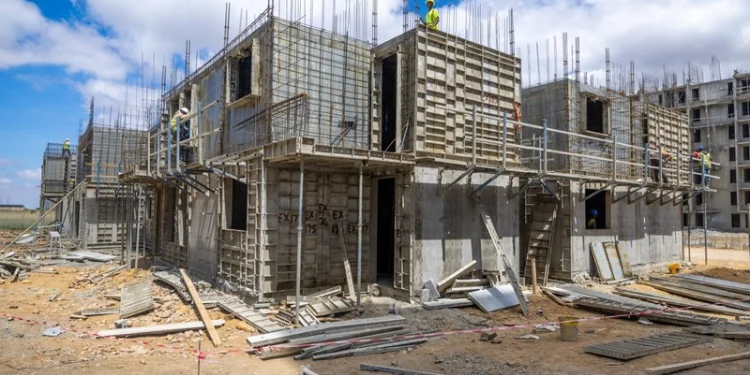
The development is using aluminium formwork, replacing much of the conventional timber-based formwork with reusable aluminium panels to cast concrete walls and floors.
The method is changing how the 11 residential blocks are built, while reducing construction waste, improving finishes and creating opportunities for workers to acquire specialised skills.
Fredrick Muli, the project’s general foreman, says the technology has shortened the time required to complete individual floors compared with traditional masonry methods.
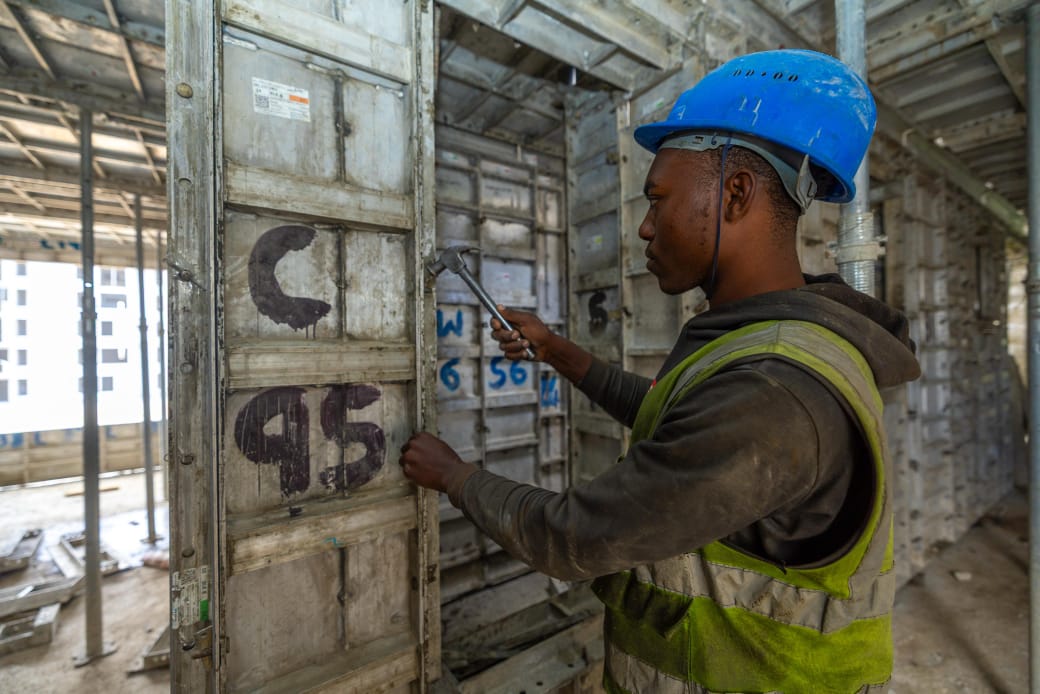
“With the aluminium formwork, the recycling period is seven days. After seven days, you must deliver one floor,” says Muli.
Engineer Caleb Chege, supervising the project, says the construction team has completed approximately 80 floors since work began in January 2026.
Unlike conventional methods that involve separate masonry and plastering stages, aluminium formwork allows concrete walls to be cast into precise dimensions. Once the panels are removed, the smooth surfaces require less finishing before subsequent works begin.
Chege says the walls, measuring approximately 160 millimetres thick, also reduce the structural load transferred to the foundations. This has been particularly useful given the relatively weak soil conditions encountered during substructure construction in the site.
The project uses self-compacting concrete containing admixtures that improve its flow during pumping into the formwork. This eliminates the need for conventional vibration and helps achieve consistent concrete surfaces.
Because the aluminium panels are reusable, the system also reduces reliance on timber and plywood, limits construction debris and supports cleaner working conditions.
Beyond construction, the project is providing employment and training opportunities. Muli says workers previously engaged in masonry and carpentry are being trained to handle aluminium formwork, equipping them with skills they can apply on future projects.
Eric Fereji, the site safety officer, estimates that “About 70 per cent of the workforce comes from neighbouring areas, including Malili, Chumbi and Machakos Junction.” He said.
Site Agent Robert Marua says the first phase comprises 1,042 units across 11 blocks, covering social, affordable and market housing categories to serve workers and other residents associated with Konza Technopolis.
As the technology takes shape across the development, the project illustrates how modern construction systems can combine more controlled building processes with skills development and local economic participation.