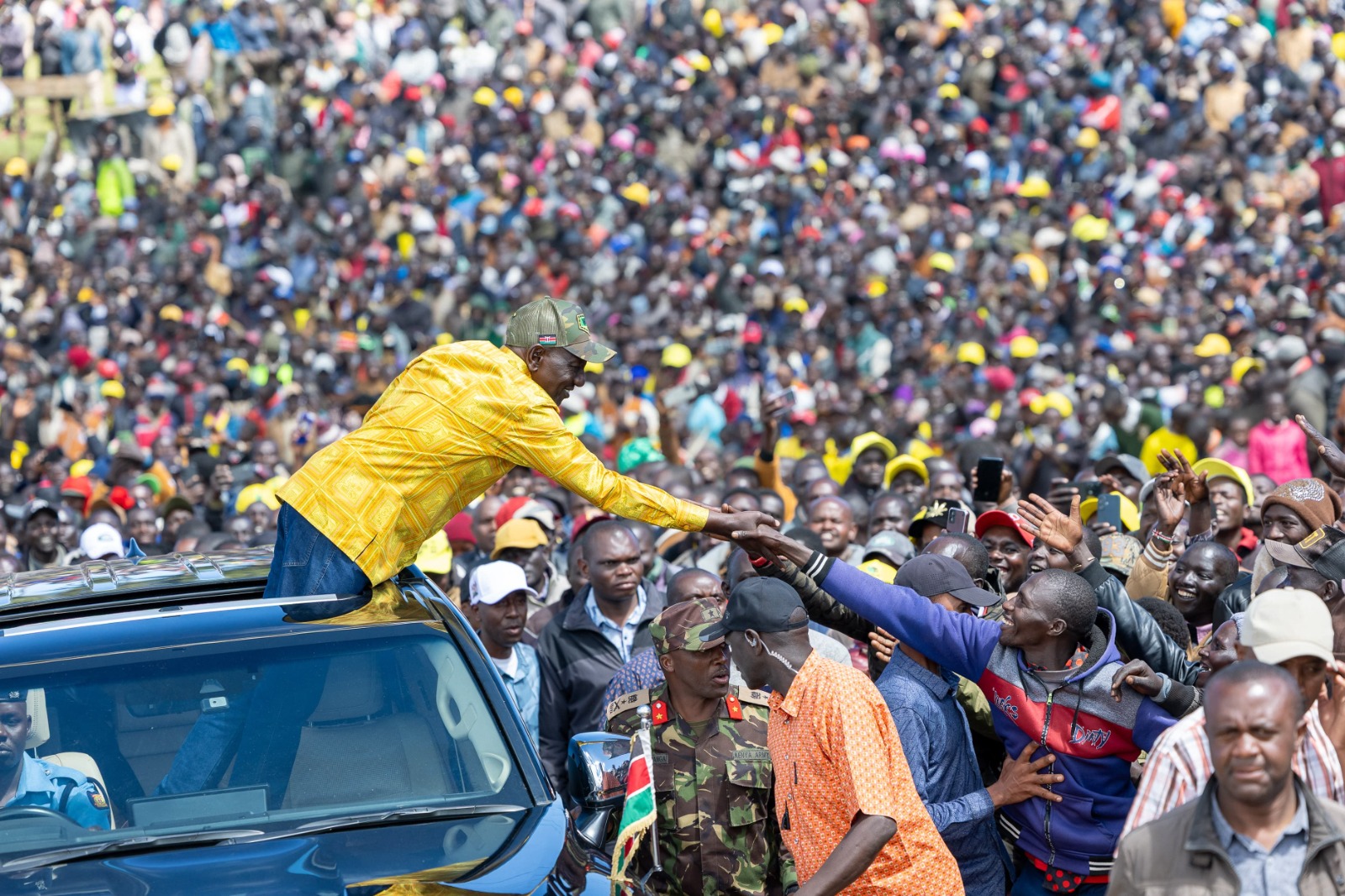
Water infrastructure and irrigation featured prominently in President William Ruto’s development engagements in West Pokot County, where he outlined plans to use dams to support households, livestock farming and agricultural production in arid and semi-arid areas.
Addressing residents in Konyao, Kacheliba Constituency, on the third day of his North Rift tour, the President said the proposed investments would be channelled through the National Infrastructure Fund.
“Through the National Infrastructure Fund, we will transform arid and semi-arid regions such as West Pokot by building dams to provide water for irrigation, domestic use and livestock farming,” he said.
The proposed dams are intended to address water needs across different uses, from household consumption to livestock production and irrigation. The plans also point to the importance of water infrastructure in supporting livelihoods in areas where access to reliable water can constrain economic activity.
By linking water storage with irrigation, the Government’s stated approach seeks to support agricultural production while providing water for domestic needs and livestock.
For communities that depend on farming and livestock, reliable water infrastructure can be an important foundation for sustaining production and diversifying livelihoods.
The President presented the proposals as part of an inclusive development agenda intended to extend investment to all regions of the country.
“This is the inclusive development we envision for every part of our country,” he said.
The water plans featured alongside road and electricity investments announced or highlighted during the President’s visit to West Pokot.
In Kacheliba, the Government launched the first phase of a KSh1 billion last-mile electricity connectivity programme. In Pokot South, it flagged off a KSh336 million project expected to connect 1,960 households to electricity.
Across West Pokot, the stated investment in household electrification stands at KSh2.3 billion, targeting 10,000 homes.
The combination of proposed water infrastructure, road construction and electricity connectivity reflects a development approach that seeks to address several constraints at once.
Water availability is central to the proposed irrigation and livestock uses, while improved roads can support access to markets and electricity can expand opportunities for households and businesses.