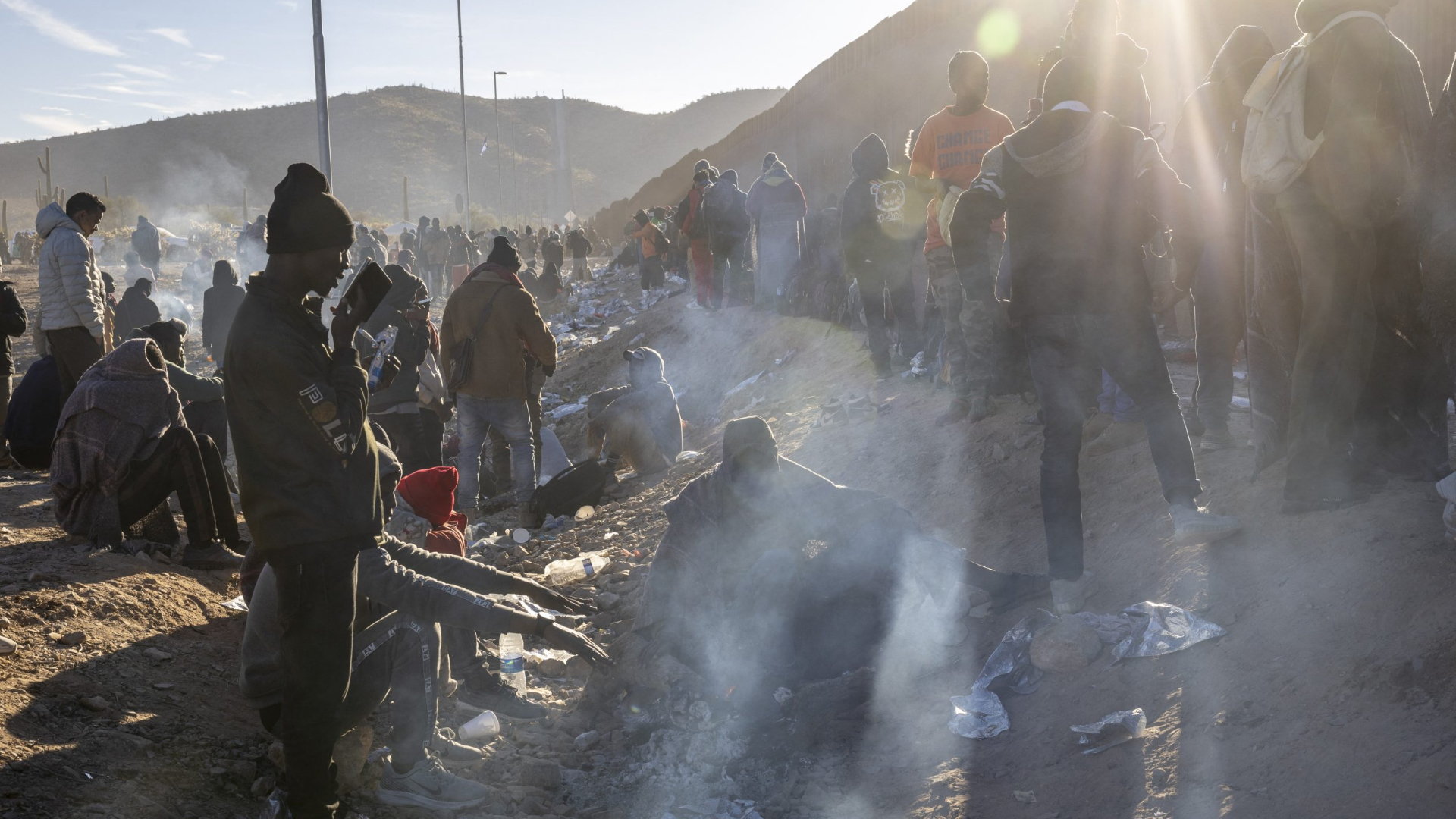
President Donald Trump’s administration has signed accords with countries in Latin America, Africa and the Pacific to accept foreigners who could not legally be expelled to their own countries.
Among the world’s poorest nations, Burundi signed an agreement with Washington in February, according to a diplomatic memo seen by AFP, excluding individuals who have committed “violent crimes”.
No financial compensation was specified, but the agreement was reportedly negotiated alongside the resumption of health aid, according to a senior Burundian security official who spoke on condition of anonymity and declined to provide further details.
Burundian authorities announced the agreement in late September, although they said then it had not yet been implemented.
Human Rights Watch (HRW) reported that 12 people from Angola, Cameroon, Mauritania, and Sudan had arrived in Burundi on August 27, citing US immigration lawyer Alma David.
Their arrival was confirmed to AFP by the security source and a Burundian government official, also on condition of anonymity.
The individuals are being kept under the supervision of intelligence agents in a large villa in the affluent Kinindo neighbourhood of the economic capital Bujumbura, the two sources said.
“These migrants refused to be sent back to their countries of origin because some said they feared facing trouble due to their homosexuality,” the security official said.
“For the moment, it is a stalemate… the migrants are there, not knowing what will happen to them,” the government official added.
An investigation published in September by the Forbidden Stories consortium estimates that 25,000 people have been expelled worldwide under the programme.
Since 2025, the US has deported more than 500 people to African countries that were not their own, according to data from the US Immigration and Customs Enforcement (ICE) cited by HRW.
str-rbu/er/cw