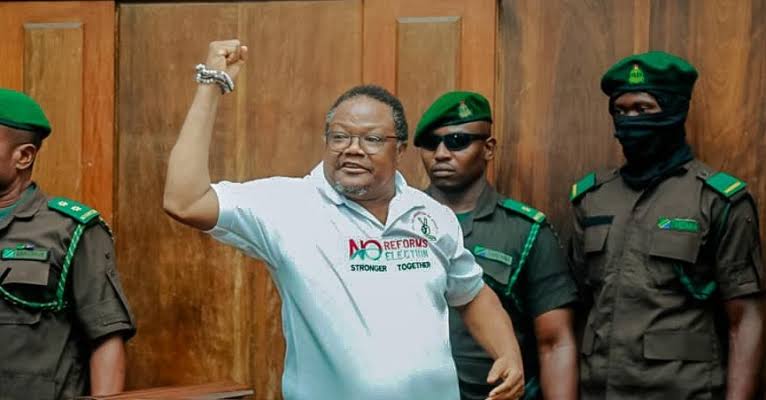
The treason case facing CHADEMA Chairman, Tundu Lissu, has been ongoing for more than a year since his arrest in Mbinga District, Ruvuma Region on April 9, 2025.
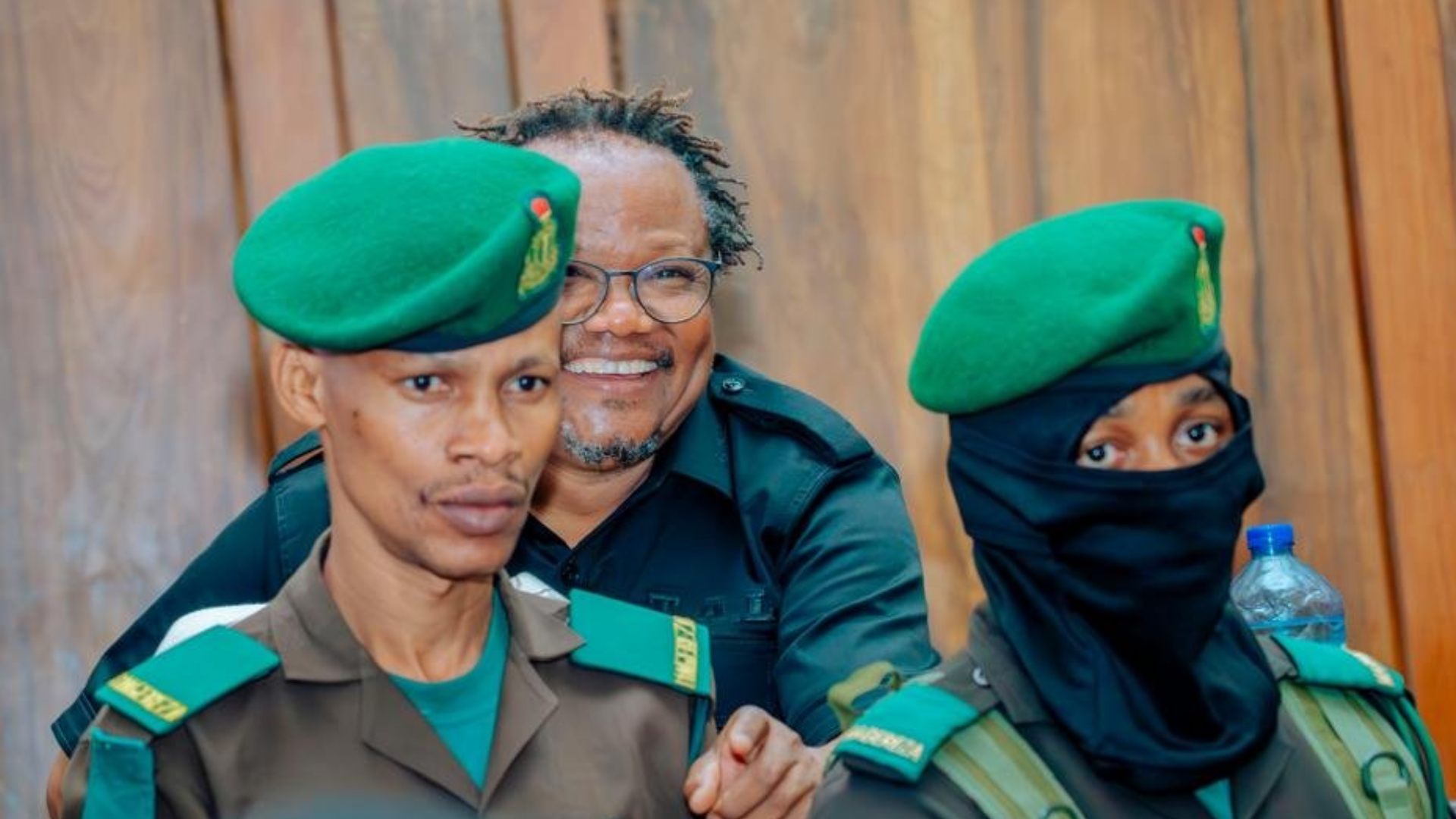
The case, which has been closely followed both inside and outside Tanzania, has gone through the Kisutu Resident Magistrate’s Court, the High Court, and at some stages the Court of Appeal. It has involved objections, legal applications, testimony from ordinary witnesses and protected witnesses, as well as disputes over digital evidence.
Now, after the Republic closed its case on August 17, 2026, the High Court, Dar es Salaam Sub-Registry, is preparing to deliver a ruling on a key question: Does the evidence presented by the Republic warrant Lissu being put to his defense, or does he have “no case to answer”?
April 9, 2025: Arrest in Mbinga
The case began on April 9, 2025, when Lissu was arrested in Mbinga District, Ruvuma Region, after addressing a CHADEMA public rally.
The rally was part of the party’s campaign linked to the slogan “No Reforms, No Election,” which CHADEMA was using to push for electoral system reforms ahead of the 2025 general election.
After the rally, police took Lissu into custody, where he was held for about 24 hours before being taken to court. He was transported from Mbinga to Dar es Salaam, a distance of more than 1,000 kilometers.
The move sparked major political and legal debate, especially regarding the circumstances of his arrest and the time he spent in detention before being arraigned.
April 10, 2025: Lissu Arraigned at Kisutu
The following day, April 10, 2025, Lissu was arraigned at the Kisutu Resident Magistrate’s Court in Dar es Salaam.
It was here that the public officially learned he was facing a charge of treason, along with three counts of publishing false information under the Cybercrimes Act.
However, at that stage Lissu was not allowed to enter a plea to the treason charge, while he pleaded not guilty to the separate charge of publishing false information.
The Republic claimed that the basis of the treason charge stemmed from statements Lissu allegedly made on April 3, 2025, during a press conference in Dar es Salaam, in which he was accused of inciting citizens to prevent the 2025 general election from taking place.
For his part, Lissu described the charges as being closely linked to his political activities.
The Kisutu Case and Early Battles
In the early stages, the case proceeded at the Kisutu Resident Magistrate’s Court for preliminary procedures before committal to the High Court.
Among the issues that arose were how the Republic’s evidence would be presented and the issue of the identity of some witnesses.
The Court allowed measures to protect the identity of some witnesses whom the Republic said required protection.
It should be noted that throughout that period, the proceedings were being broadcast live by various media outlets, using the Court’s own channel, which was airing the broadcasts.
On August 18, 2025, things changed. Kisutu also ordered that the testimony of the Republic’s witnesses in the case should not be broadcast live by the media, a step linked to witness protection, particularly for civilians who were not security officers.
That step became part of a broader debate about the balance between a defendant’s right to a public trial and the protection of witnesses.
Lawyers and Activists Also Get Drawn Into the Case
The course of Lissu’s case did not remain confined to the courtroom. In the early stages, the environment surrounding the case also witnessed the arrest of some lawyers, the barring of lawyers who wanted to represent Lissu, and the intervention of activists seeking to ensure his legal rights were protected.
Among the incidents that drew the most attention was the arrest of Kenyan lawyer and opposition politician, Martha Karua, who had come to Tanzania with the intention of representing Lissu. Karua was arrested after arriving in the country and was later deported back to Kenya, an action that sparked debate about the role of foreign lawyers in the case.
Some other lawyers associated with the case also faced obstacles in carrying out their duties, while Lissu’s side complained about the difficulty of getting private consultation with him while he was in custody.
These issues caused Lissu’s case to be viewed beyond the confines of the court. Human rights organizations, activists, and legal institutions in Tanzania and abroad began issuing statements expressing concern about the environment in which the case was being conducted.
The debate covered several issues, including the defendant’s right to legal representation, the independence of lawyers to carry out their duties, the right to private consultation with a client, and the right to a credible process.
On the part of the authorities, actions taken against some of the people involved in the case were linked to security matters and law enforcement.
However, for activists and human rights organizations, those events raised further questions about the role of the justice system in a case facing the country’s main opposition leader.
In that way, Lissu’s case was no longer just a matter of charges against one individual. It also became a wider debate about the right to defend oneself, the independence of lawyers, and the role of civil society in protecting the rights of defendants.
The Case Moves to the High Court
After investigations were completed, the case reached the committal proceedings stage at the Kisutu Court. On August 18, 2025, the Court completed that stage and Lissu was served with witness statements and exhibits that the Republic intended to use in the High Court case.
The Republic told the Court that it planned to call 30 witnesses and present nine exhibits in the case.
That is when the case officially moved to the stage of being heard by the High Court.
High Court: The Case Begins Officially
When the case was heard in the High Court, it was placed before a panel of three judges.
The panel was led by Justice Dunstan Ndunguru, assisted by Justices James Karayemaha and Ferdinand Kiwonde.
The Republic continued with its evidence, stating that Lissu made statements aimed at inciting citizens to prevent the 2025 general election and that those statements were intended to rebel against or threaten the government.
For his part, Lissu chose to take on a large role in cross-examining the Republic’s witnesses himself.
That is when the case began to take on a different dimension.
October 2025: Lissu Begins Questioning Witnesses
On October 6, 2025, the Republic’s first witness, Assistant Commissioner of Police George Bagemu, began giving evidence.
He was in the witness box for four days, with Lissu conducting most of the cross-examination.
Among the issues that came up was the legal interpretation of statements linked to preventing an election.
The witness stated that preventing an election through lawful means is not treason, but that attempting to prevent an election through unlawful means, threats, or by breaking the law could fall within the scope of the offence of treason.
Lissu also asked the witness about his political history and his role in democracy and human rights movements.
Video Evidence: Flash Disk and Memory Card
One of the most contentious aspects of the case was the video evidence.
The Republic submitted a flash disk and a memory card containing a video that was alleged to contain Lissu’s statements.
The third witness, Police Inspector Samweli Eribariki Kaaya, a forensic imaging expert, explained how he received the items for investigation.
But Lissu objected to the admission of that evidence.
He argued that the witness did not have the authority or legal qualifications required to present some of that evidence. That became an objection that took the Court several days to determine.
On October 23, 2025, the High Court agreed with one of those objections and rejected the report submitted on the authenticity of the video, saying the witness did not have the legal capacity to present that evidence.
That ruling became one of Lissu’s legal victories at that stage of the case.
Protected Witness Enters the Case
As the Republic’s evidence continued, the issue of protected witnesses became one of the major areas of dispute.
The Republic began presenting witnesses who were not visible to the public or to the defendant.
One of those witnesses was identified by the pseudonym P5 and gave evidence from a special dock that concealed him from the public and from Lissu, while only the judges could see him.
The Republic stated that the measure was for the safety of witnesses. But Lissu objected to the way the procedure was implemented, insisting that witness protection should not infringe on his right to a fair trial. That sparked heated arguments and another objection was raised.
February 2026: Dispute Over the Witness “Dock”
The dispute reached another stage in February 2026, when Lissu objected to the design of the special dock being used to conceal the witness.
He argued that if a witness is concealed to the extent that the judges cannot properly see his demeanor, that could affect the Court’s ability to assess his evidence.
On February 11, 2026, the Court partly agreed with that argument and ordered the area to be modified so that the judges could see the witness properly. However, the Court dismissed some of Lissu’s other objections regarding the use of protected witnesses.
Thus the case continued, with the procedure of protecting witnesses continuing to be used.
Other Witnesses and Arguments About the Election
During that period, the Republic continued to call its witnesses.
Some of them testified about how Lissu’s statements were interpreted by state organs and how youth or various groups were allegedly mobilized ahead of the October 29, 2025 election.
Another witness, identified as P8, gave evidence as part of the group of protected witnesses. The witness identified himself as a CHADEMA member but stated that in the circumstances of the case he did not recognize Lissu as his chairman.
Later, another police witness testified about information allegedly received by police regarding youths who were mobilizing to prevent the election and to support Lissu.
With each witness, Lissu continued to use his opportunity to cross-examine the Republic’s evidence.
Lissu and His Questions to Witnesses
At various points in the case, Lissu used his legal experience to ask questions aimed at showing discrepancies between the witnesses’ court testimony and their earlier statements.
In one of those sessions, he even used the Police General Orders to question police officers about how they conducted investigations, how they recorded statements, and the steps they took in carrying out their duties.
That process made the case not just about listening to the Republic’s evidence, but also a forum for Lissu to challenge how that evidence was gathered and presented.
Another Objection: Republic Seeks to Add Evidence
On February 18, 2026, the Republic attempted to submit additional evidence through ACP Amin Mahamba, who was associated with the investigation team for events that occurred during and after the October 29, 2025 election.
The application was made by the Republic under Section 308 of the Criminal Procedure Act, Cap. 20 Revised Edition of 2023.
Lissu opposed the application.
He argued that Section 308 of the Criminal Procedure Act concerns evidence that existed at the time of committal proceedings but was not read, not new evidence obtained later.
On February 24, 2026, the High Court agreed with that argument and barred the Republic from introducing that additional evidence.
In delivering the ruling, Justice Ndunguru said the Court had considered the submissions of both sides, the provisions of the law, and the record of the case proceedings. But that Section 308 opens the door to calling a witness and his statement, but does not open the door to bringing a new witness or new evidence that did not exist at the earlier stages of the case.
That decision prompted another legal step.
Republic Goes to the Court of Appeal
After the High Court rejected the additional evidence, the Republic filed an application for review in the Court of Appeal.
That step caused the main case to be adjourned for a time, while the issue of the Republic’s authority to submit that evidence was taken to the Court of Appeal.
Lissu also opposed that move, saying the High Court’s decision was an interlocutory decision that had not determined the rights of the parties and therefore should not have been subject to review in the manner sought by the Republic.
For that reason, the main case was stalled for several months.
Case Resumes August 2026
After a delay of approximately 160 days, the case returned to the High Court on August 10, 2026.
By then, the Republic had already called 15 witnesses, and Lissu continued with the process of cross-examining the remaining witnesses.
The case entered its final stage of the prosecution’s evidence.
Lissu Finishes Cross-Examining the Lead Investigator
In the final days of the Republic’s evidence, Lissu spent considerable time cross-examining the lead investigator in the case.
His questions focused, among other things, on how the investigation was conducted, witness statements, and discrepancies between oral testimony and written statements.
Some of those examinations also involved how police officers carried out their duties during the investigation.
This was a crucial stage because Lissu had reached the end of his opportunity to cross-examine the Republic’s evidence before that side closed its case by calling the 17th witness, who was a protected witness with a background in journalism and an employee of Jambo TV.
August 17, 2026: Republic Closes Its Case
Finally, on August 17, 2026, the Republic officially closed its case.
At that stage, the Republic had presented evidence through 17 of the 30 witnesses it had initially listed.
After the Republic closed its case, Lissu did not wait to be called to present his defense.
Instead, he filed a submission that he had “no case to answer.”
In other words, Lissu is asking the Court to assess the evidence presented by the Republic and conclude that it does not meet the threshold to require him to begin presenting a defense. He has also asked to be acquitted and for the Government to be ordered to pay him compensation.
What Happens Next?
This is the most critical stage of the case since it began.
The High Court now has to answer one fundamental question:
Has the Republic presented sufficient evidence to require Tundu Lissu to begin his defense?
If the Court finds that the Republic has not established a sufficient basis, Lissu may have “no case to answer” at this stage and the case could come to an end without him presenting defense evidence.
But if the Court finds that the Republic’s evidence is sufficient to require him to respond, the case will move to another stage of Lissu’s defense.
The High Court, Dar es Salaam Sub-Registry, has said it will deliver its ruling on the matter on Friday, August 21, 2026.
More Than a Year Later
The case that began with Lissu’s arrest in Mbinga on April 9, 2025, has gone through more than a year in custody and various court stages.
From Kisutu to the High Court, that journey of approximately 496 days has involved debate over evidence, protected witnesses, digital evidence, the capacity of witnesses to present exhibits, applications to add evidence, and matters taken to the Court of Appeal.
For now, however, that first phase of the case is complete: the Republic has finished presenting its side.
What is awaited now is the Court’s decision on whether the evidence presented is sufficient to require Tundu Lissu to answer the treason charges.
It is a decision that will determine whether the case ends at this stage or moves to another chapter.
The next chapter would be Lissu beginning his defense against a charge that carries one of the heaviest penalties under Tanzanian law, where, if a defendant is found guilty, the sentence is death