“Basic options for survival have shrunk dramatically until they have been reduced to a single water well that has become the only source and the last remedy for everyone. More than a thousand people gather around this exhausted well every day, coming from Ain Siro and six neighboring areas, in a scene that reflects the horrifying scale of growing pressure on scarce water resources and a bitter struggle lasting several hours each day to obtain a drop of water to quench the thirst of families and dying livestock.”
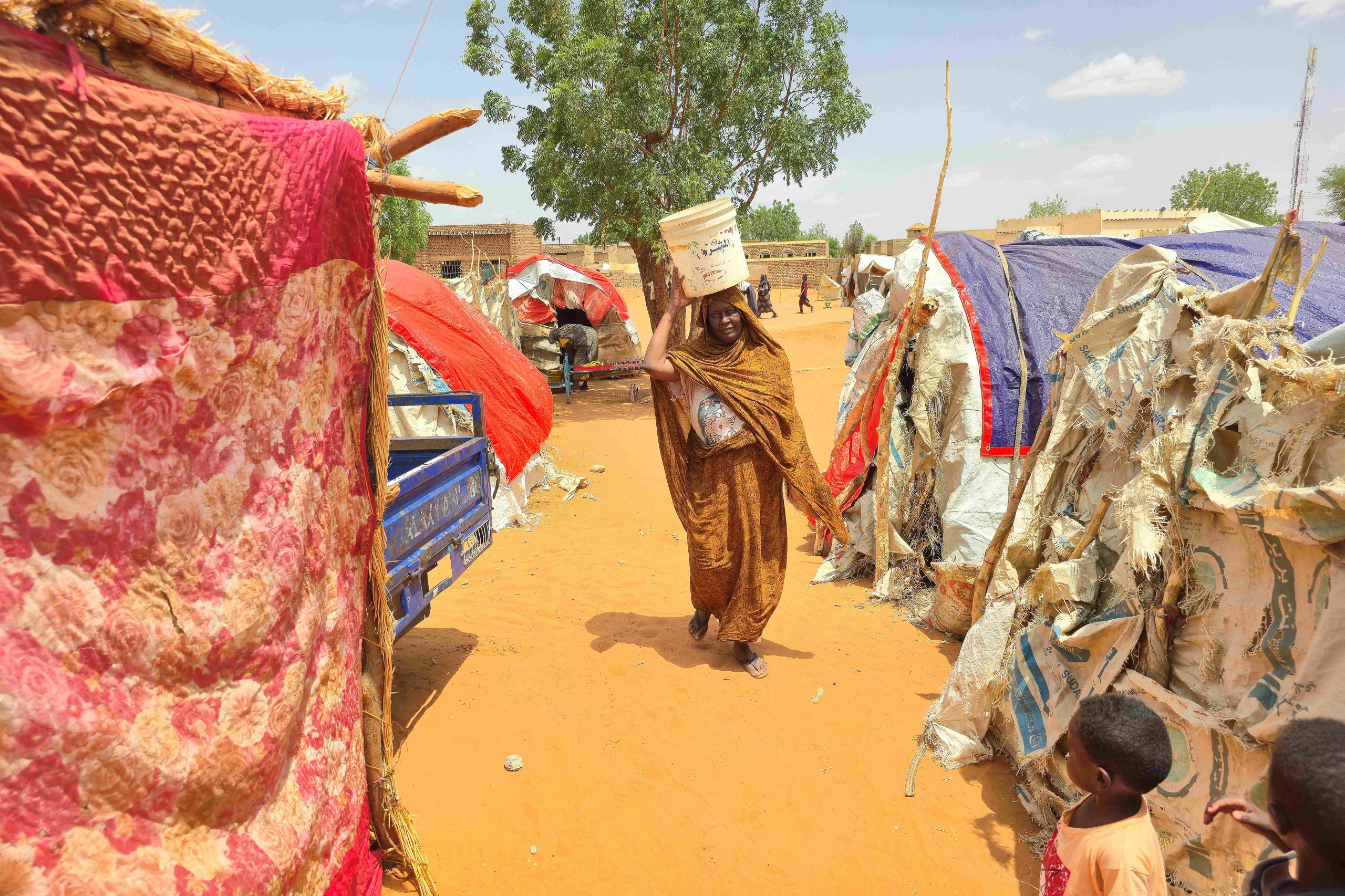
Speaking to Madaniya, Sudanese citizen Musa Abu Bakr described from the heart of North Darfur State, specifically the Ain Siro area of Kutum locality, the repercussions of climate change amid the continuation of the war since mid-April 2023.
Musa Abu Bakr confirmed that “drought is hitting the area this year with a harsher and more severe face than in previous years. While residents had grown accustomed to the beginning of the dry season and traditional water shortages in September of every year, they were caught off guard by the drought arriving early this season, since last June.”
According to Abu Bakr, this shocking climatic shift “warns of an unprecedented water and humanitarian catastrophe that is consuming what remains of the area’s residents’ resilience and ability to survive.”
In this context, the Ain Siro Emergency Room raised the alarm through an official report issued on September 7, 2026, warning of the deteriorating humanitarian and environmental consequences.
The report confirmed that “the succession of continuous days of drought, crop damage and acute shortages of fodder and water have placed food security and human and animal health at serious risk.” The Emergency Room issued “an urgent appeal to humanitarian organizations, donors and all benefactors to intervene rapidly to save the area before it is too late, through the immediate provision of clean drinking water, food and fodder, the dispatch of health and veterinary service convoys, and the acceleration of repairs and rehabilitation of damaged wells and water tanks, which could ease the catastrophic pressure on the only water source.”
UN Concerns
In this context, the strong and persistent El Niño phenomenon represents a genuine concern for food security in Sudan. Forecasts indicate that rainfall in the country could decline by between 30% and 40%, according to the United Nations.
The United Nations indicates that the Food and Agriculture Organization (FAO) “has already put in place anticipatory plans in Sudan as part of a broader joint global plan with the World Food Programme targeting millions of people.”
As war and climate change overlap with drought, rising prices, declining production and a liquidity crisis, Sudan’s food crisis is heading toward an increasingly complex phase. Concerns are particularly focused on Darfur, Kordofan and areas along the front lines, where access to food, water and humanitarian assistance is a decisive factor in preventing the crisis from worsening.
Sudan’s grain production last year, including sorghum, millet and wheat, reached around 5.2 million tons, a 22% decline from 2024 production and around 19% below the five-year average.
War Takes Priority
The United Nations has sounded the alarm and called for broad mobilization to confront climate change. Meanwhile, the FAO’s 2026 response plan, which covers all 18 Sudanese states, requires $193 million, but has so far received only around $44 million, equivalent to just 23% of the funding required. Funding for the comprehensive agricultural response under the inter-agency joint plan appears even more critical, with only 11% of its requirements funded.
Meanwhile, war remains Sudan’s priority. The army-backed government has not announced any plan to confront the repercussions of climate change, instead giving priority to a war whose fate has become uncertain.
The Gedaref Resistance Committees revealed that “50 billion pounds were handed by the state’s Ministry of Finance to the Gedaref Municipality to support demonstrations in favor of continuing the war.” In a statement, they added that “the state witnessed demonstrations denouncing the United States’ refusal to grant army commander Abdel Fattah al-Burhan a visa to attend the United Nations General Assembly meetings in New York.”
They explained that the event “was planned by the camp advocating the continuation of the war through well-known figures, foremost among them the governor, with a budget estimated at around 50 million Sudanese pounds through the municipality and the Ministry of Finance,” noting that after efforts to mobilize citizens failed, crowds of worshippers were exploited after Friday prayers to participate.
They added that “allocating state funds to organize political events comes at a time when citizens are suffering from the ravages of war and rising living costs,” questioning the usefulness of deploying state resources in political battles that do not address the essence of citizens’ suffering, while the same authorities restrict other citizens from entering the country or obtaining their identification documents. The committees noted that they would publish the relevant documents and records once reliable information was received disproving what had been reported about the funds allocated for the event.
Chemical Weapons Crisis
While the war in Sudan continues, the international community is witnessing intense debate over chemical weapons, which the United States has said were confirmed to have been used by the army under al-Burhan’s leadership.
Sudan has been a state party to the Chemical Weapons Convention since 1999. All states parties have agreed to eliminate chemical weapons by destroying any stockpiles of chemical weapons and production facilities they may possess, as well as destroying any chemical weapons they may have left in the past on the territory of other states parties.
Prominent Democratic Senator Chris Van Hollen, chairman of the Senate Foreign Relations Subcommittee on Africa and Global Health Policy and a member of the Senate Foreign Relations Committee, called for an independent international investigation led by the Organisation for the Prohibition of Chemical Weapons (OPCW) into allegations against the Sudanese army.
In testimony featured in the investigative documentary The Invisible Weapon, which was screened last Thursday evening at the National Press Club in Washington in the presence of diplomats, experts and journalists, Van Hollen said that “the United States concluded that the Sudanese Armed Forces used chemical weapons, and additional evidence subsequently emerged supporting that conclusion.” He stressed that he would continue pressing within the Senate for the administration of President Donald Trump to formally call on the organization to investigate, determine the scope of the potential chemical weapons program, and hold accountable those responsible for developing and using the weapons.
U.S. Sanctions
The United States has stepped up pressure on the army after imposing sanctions on al-Burhan, accusing him of committing crimes against civilians, destroying infrastructure and obstructing all peace efforts.
The United States imposed sanctions in May 2025 after Washington concluded that al-Burhan had allowed the use of chemical weapons.
Before the 112th session of the Executive Council of the Organisation for the Prohibition of Chemical Weapons, held in The Hague in July 2026, the United States said that the Sudanese army had used chemical weapons in 2024, considering it to still be in non-compliance with the Chemical Weapons Convention in 2025. It added that, following a “rigorous and independent technical analysis,” it had concluded that the Sudanese government had used chemical weapons in 2024 and had remained in non-compliance in 2025.
During the same month, the United States imposed additional sanctions on Sudan, accusing the Sudanese army of using chemical weapons in 2024. The measures included a ban on the United States providing loans, financial assistance or technical support to Sudan through international financial institutions, with the exception of humanitarian assistance.