The High Court, Dar es Salaam Sub-Registry, is expected to deliver judgment in the treason case facing Chadema Chairman Tundu Antipas Lissu on November 6, 2026, after both the Republic and the defence completed their final submissions.
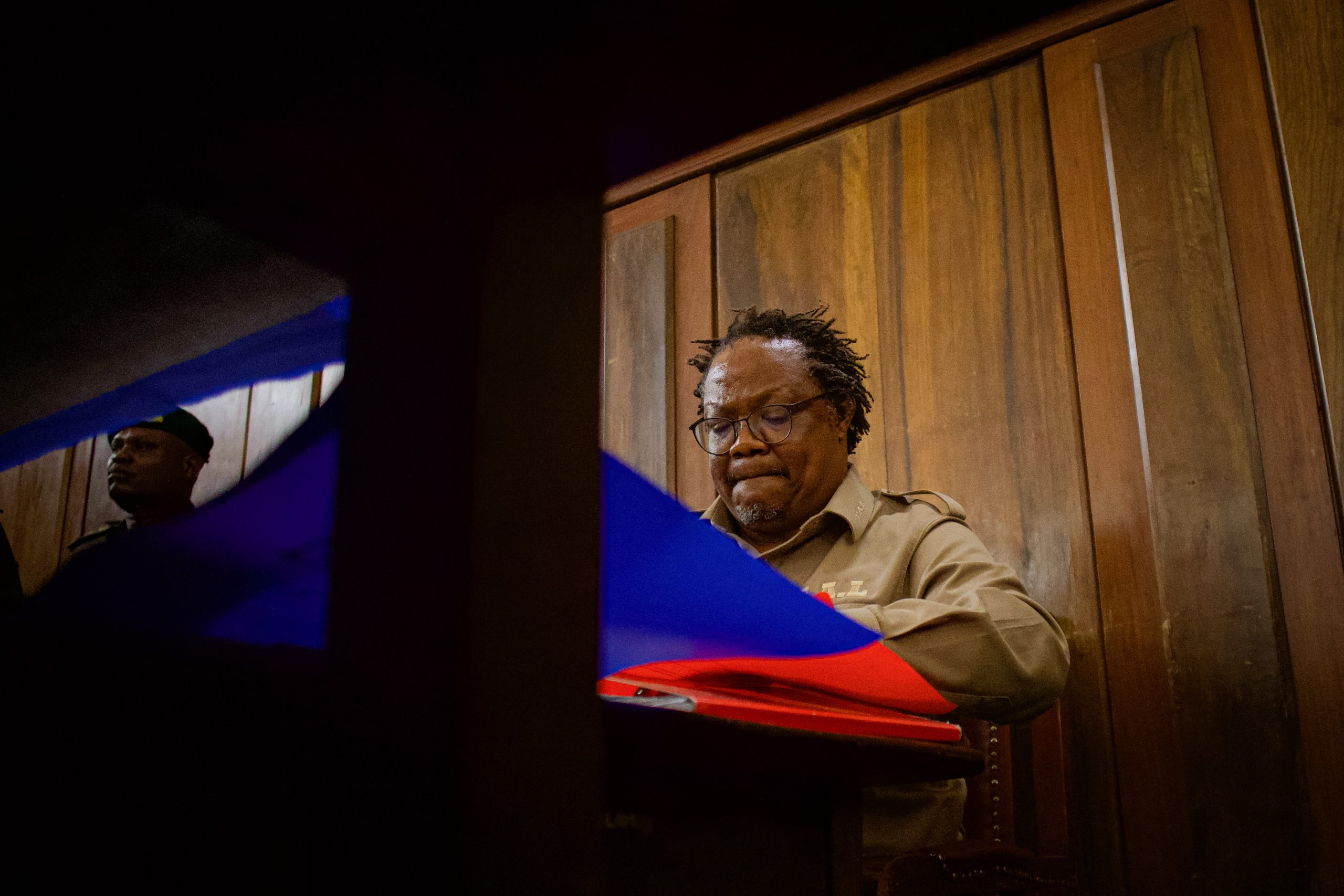
The trial comes after Tanzania weathered international criticism over its handling of protests around national polls last year, in which thousands were killed according to the opposition and rights activists. (Photo by AFP)
The date was set at the end of the Republic’s submissions on September 29, 2026, when Principal State Attorney Nassoro Katuga told the court that the prosecution believes it has proved the elements of the offence beyond reasonable doubt.
Lissu is charged with treason under Section 39(2)(d) of the Penal Code, Chapter 16. He is accused that on April 3, 2025, in Kinondoni District, Dar es Salaam, while owing allegiance to the United Republic of Tanzania, he formed an intent to incite the public to prevent the 2025 General Election with intent to threaten the Government, and manifested that intent by uttering and publishing the words cited in the charge sheet.
Among those words are the statements allegedly made by Lissu: “we will prevent the election, we will mobilize rebellion” and “we will disrupt this election,” which the Republic has used as the basis for its argument that the statements were aimed at threatening the Government to effect change.
In his submissions, Katuga began by directing the court to Section 39(2)(d), saying it applies to a person who owes allegiance to the United Republic of Tanzania, whether inside or outside the country, and who intends to incite the public for the purposes stated in that section.
He linked it to Section 135 of the Criminal Procedure Act, Chapter 20, saying the law requires a charge sheet to state the offence and how it was committed so the accused can understand and defend himself. He also referred to Section 138(a)(iii), which requires ordinary language.
According to Katuga, the charge sheet was drafted on the basis that Lissu is a Tanzanian citizen owing allegiance to the United Republic, and that he intended to incite the public to prevent the 2025 election.
He said the charge sheet used the word “public” to describe those incited, and that the evidence shows Lissu did not target one individual or a specific group. The Republic therefore asked that “public” be interpreted in the context of the case, meaning a group of people without a legally required number to qualify as a group.
Katuga added that some words used in the statute and those in the charge sheet should not be taken to have the same meaning because the statute uses the word “or,” indicating that the separated items need not share the same meaning. He said this was not his personal opinion but derives from the law debated and enacted by Parliament, referring to Section 13 of the relevant law.
On how treasonous intent can be manifested, Katuga said Section 39(2)(d) provides for manifestation through distribution of writings or drawings. He discussed the difference between “manifestation,” “overt act,” and related concepts, citing the case of Khatibu Ghandi and Others vs Republic, where “overt act by individual” was discussed.
According to Katuga, in the circumstances of this case, uttering the words itself can constitute a legally cognizable act, and he asked the court to consider Section 89(1)(a) of the Penal Code on uttering words as an act.
On publishing, Katuga said Lissu not only uttered the words but also published or distributed them. He said Section 39(2)(d) provides for two forms of “publishing,” including writing or printing, and that the charge sheet quoted the words in quotation marks with ellipses indicating that part of the words was omitted. The court should therefore read the words in the charge sheet with an understanding acceptable in the context of the charge.
On punishment, Katuga said the section provides for the possibility of the death penalty if convicted. He said he raised this because the defence had argued that the only punishment for the charge is hanging. He explained that the phrase “shall be liable” means the punishment can range from a lower sentence up to death, and the court has discretion to decide, considering the nature of the act. He cited Bahati John vs Republic, Criminal Case No. 114 of 2019, judgment delivered in July 2022.
On the burden of proof, Katuga said it lies with the Republic under Section 3(2)(a) of the Evidence Act, Chapter 6, and that with the interpretation of Section 39(2)(d) and how the charge sheet was drafted, the Republic believes the evidence has proved the charge. He said the defence failed to shake the prosecution evidence, with many answers being “I don’t know” and “I don’t remember.”
Katuga asked the court to consider the elements of the offence by asking three key questions:
- Does Lissu owe allegiance to the United Republic of Tanzania?
- Did he form an intent to threaten the Government?
- Did he manifest that intent by distributing and publishing the words?
According to Katuga, these elements are similar to those discussed in Khatibu Ghandi and Others vs Republic, although that case was under Section 39(2)(a) while Lissu’s case is under Section 39(2)(d).
On the first element, he said the issue of allegiance was not disputed during preliminary objections. He said page 133 of the court record shows Lissu himself stated he is a Tanzanian owing allegiance to the United Republic. Katuga added that after the preliminary objections were determined, the Republic’s duty is to prove what is in the charge sheet, and issues raised at the preliminary stage do not change the legal burden. He said the “summary of evidence” at the preliminary stage is not the charge itself but is used to prove disputed facts.
On the second element, he said the Republic must prove whether Lissu formed an intent to incite the public to threaten the Government. He said the word “Government” in Section 39(2)(d) has no specific interpretation separating it from the Executive or Judiciary, so it should be interpreted as written.
Katuga referred to the evidence of PW1, who told the court that Lissu intended to threaten the Government because the Government has a duty to protect the law and disrupting a lawful election is threatening the Government. He also referred to PW16, who said the words “we will prevent the election” and “we will mobilize rebellion” were aimed at threatening the Government which has the duty to maintain peace and stability.
According to Katuga, PW16 said the statements were not only aimed at disrupting peace but also at disrupting an election established under the law and the Constitution, and that statements about “kukinikisha” were aimed at hurting people, throwing stones at them, and preventing them from voting.
Katuga said the evidence of those two witnesses was corroborated by the defence, including Lissu himself.
On that basis, he said the Republic believes it has proved that Lissu formed an intent to threaten the Government, shown through the words he uttered and which the Republic included in the charge sheet – involving mobilizing rebellion, “kukinikisha,” and preventing the election as a means to achieve change.
On evidence of uttering the words, Katuga said although the words were not admitted in that form at the preliminary stage, during trial 16 prosecution witnesses testified that Lissu uttered them at the April 3, 2025 meeting associated with Jambo TV. PW17 also said he heard the words because he was at the meeting.
Katuga said that during cross-examination, Lissu did not dispute uttering the words, but disputed that they constitute treason and that he distributed them. In the Republic’s view, the prosecution evidence was corroborated by the defence and there is no doubt Lissu uttered the words on April 3, 2025.
He said the prosecution evidence explained how the words were received and how the Republic reached its conclusion about Lissu’s intent.
Katuga said the words quoted in the charge sheet are complete and meaningful sentences, and that prosecution witnesses supported them. He said even DW3 and DW4 confirmed that the quoted words were complete and meaningful.
He also said Lissu’s own evidence could support the prosecution’s case, saying Lissu uttered the words while believing he would be charged with treason. He said the accused’s evidence is important in considering the circumstances of the case.
On whether the statements incited the public, Katuga said the Republic brought witnesses who claimed to be affected by Lissu’s words, coming from different sections of Tanzanian society. Some were supporters and others were sympathizers of Chadema, and they explained how they were incited by their chairman.
Referring to the court record, Katuga said one witness explained how people would unite to beat, commit violence, and throw stones at those going to vote. He said that evidence was also corroborated by defence witnesses DW1 to DW4.
In general, Katuga said that through the words in the charge sheet and evidence corroborated by the defence, the Republic has proved its argument that Lissu formed an intent to threaten the Government because the Government is the one with legal authority. He said the issue of publishing or distributing the words was also proved through prosecution witnesses corroborated by the defence.
In conclusion, Katuga said: “We tell this Court, with the evidence of 17 witnesses corroborated by five defence witnesses, it is our argument that the Republic has proved the case beyond reasonable doubt,” asking the court to record that the accused committed the offence.
After the submissions, the court set November 6, 2026, as the date for judgment