Cameroonian President Paul Biya’s prolonged absence has intensified concerns over governance and renewed debate about political succession, with the 93-year-old leader and world’s oldest serving head of state remaining in Switzerland nearly seven weeks after leaving Cameroon on June 7 for what the presidency described as a “short, private stay in Europe” with First Lady Chantal Biya.
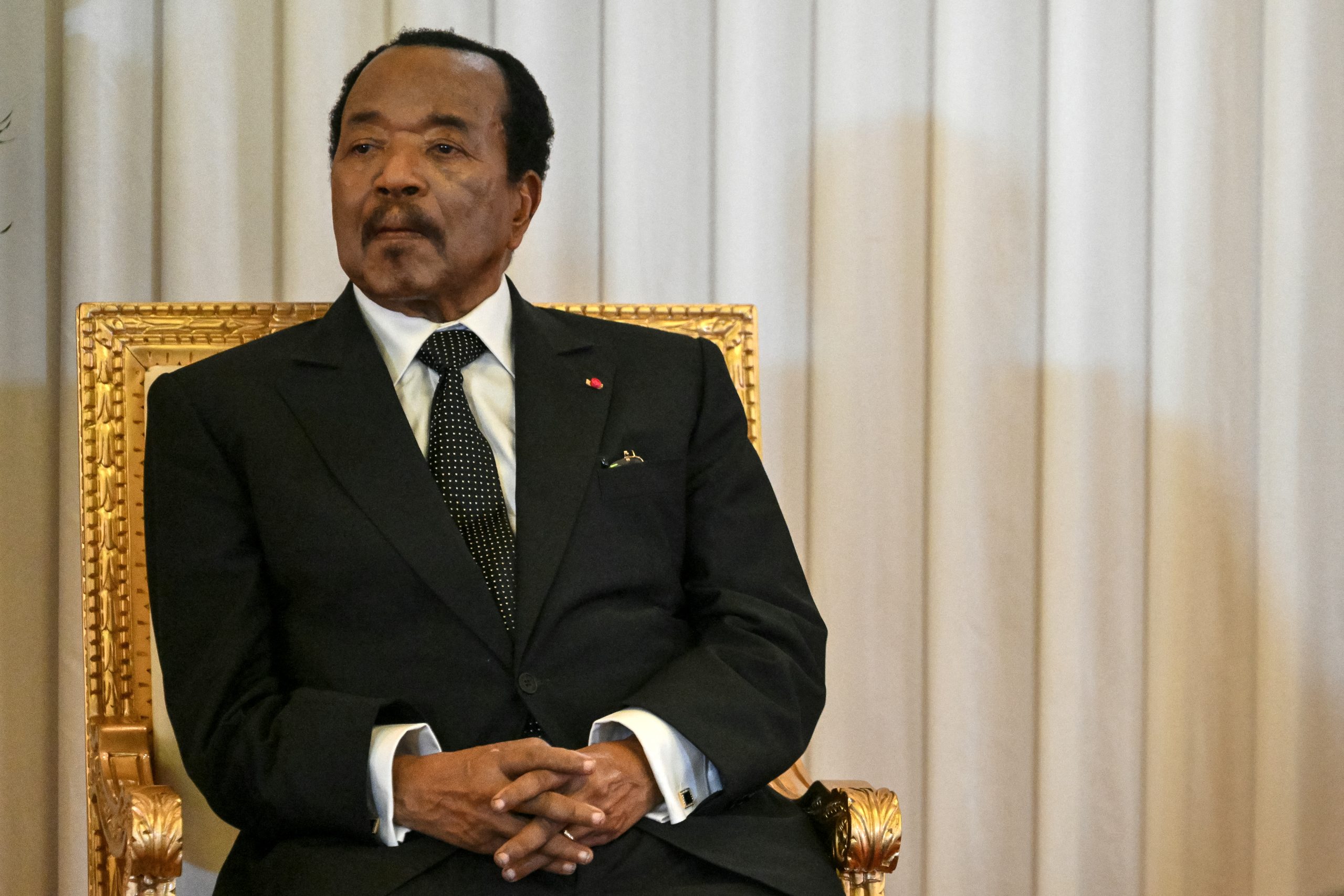
His continued absence from public view, which has reached over 53 days, has fuelled growing speculation about his health and raised questions among opposition figures, political observers and sections of the public over decision-making and leadership in the Central African nation.
His absence has sparked renewed criticism from opposition leaders and political analysts, who argue the country is facing institutional paralysis as key government decisions remain pending.
The absence has cripped into the military after a Cameroonian general rejected a decree announcing his retirement, adding to growing questions over the prolonged absence of President Paul Biya and the authenticity of official documents issued in his name.
General Tchemo Hector, whose retirement was announced in a decree read on state broadcaster CRTV on Wednesday, said he will remain in office until authorities clarify what he described as irregularities surrounding the decision.
“I have every right to inquire in good faith about the president’s well-being,” Tchemo allegedly said in a statement circulating on Thursday, referring to Biya’s extended stay abroad.
The general is said to have added that “The president is someone with whom I have had exchanges. Given our relationship, I am certain that I would have been informed, or that at the very least we would have discussed this important matter before the publication of any decision announcing my retirement after all these years of service to the nation,” he said.
Tchemo said the procedure surrounding his retirement did not follow the process he was familiar with and questioned the authenticity of the decree.
“Until all the questions I have raised with the relevant authorities and the concerns I have expressed in private, some which I cannot discuss publicly, have been duly addressed, I remain fully in office and will continue to serve this nation as I have done for most of my life,” sources quote.
The retirement decree has intensified debate over where and when it was signed, with critics questioning whether the president personally approved the decision. Some observers have also pointed to what they claim are inconsistencies between the signature on the latest decree and signatures on previous official documents.
The presidency has not publicly responded to questions surrounding the decree or Biya’s whereabouts beyond its earlier statement describing his trip as private.
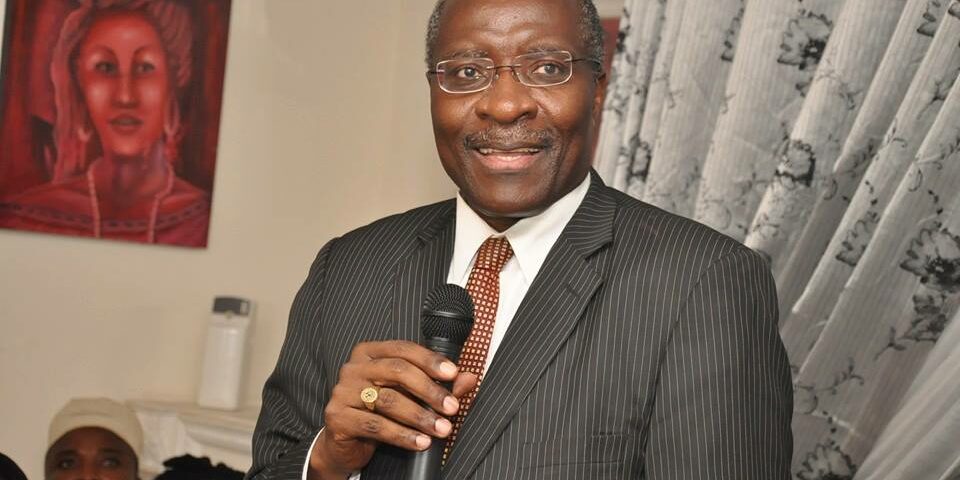
Dr. Christopher Fomunyoh, Senior Associate for Africa and Special Advisor to the President at the National Democratic Institute (NDI), is among those who have also raised concerns over the president’s continued absence.
Dr. Fomunyoh has called for a fundamental political reset in Cameroon, saying the country could only build “a new nation” if citizens actively demanded change, while arguing that the current political order had lost legitimacy following the disputed October 2025 presidential election.
Speaking at a conversation dubbed Working To Redefine Our Nation, Fomunyoh said Cameroonians at home and abroad have the capacity to shape a different future but warned that failure to act will leave the country “building on shaky ground without pillars.”
“The status quo is unacceptable. It’s been challenged from all corners,” he said, arguing that the October 2025 presidential election had further undermined confidence in the country’s leadership and placed its legitimacy under scrutiny,” he said.
Fomunyoh, an analyst and democracy advocate, said public perceptions of the election could not be altered through government decrees or ruling party statements, adding that even some members of the governing party know the winner of the October 2025 presidential polls was Issa Tchiroma Bakary, now exiled in Gambia and still rallying support to return to Cameroon.
He pointed to the country’s conflict-hit Northwest and Southwest regions as evidence of growing public disillusionment with the government, citing years of violence that he said had destroyed villages, killed civilians and security personnel, displaced nearly one million people internally and forced about 100,000 others to seek refuge in neighboring countries such as Nigeria.
“The majority of them have disconnected from the status quo because they can no longer identify with it,” he said.
Fomunyoh also questioned the functioning of the state, saying many citizens no longer know who is effectively governing the country or making key decisions.
“People without vision or mandate of the country are pulling strings to determine the fate of over 30 million Cameroonians,” he said, adding that some individuals relied on force following the 2025 election, leading to deaths, arrests and imprisonment of government critics.
He traced what he described as Cameroon’s constitutional challenges to a 1984 presidential decree that altered the structure of the state, arguing that subsequent constitutional reforms had failed to strengthen democratic governance.
The democracy advocate said several provisions introduced under the 1996 Constitution, including requirements for public officials to declare their assets, had never been fully implemented.
He also criticized the 2008 constitutional amendment that removed presidential term limits, saying it was adopted despite protests in which demonstrators were killed in cities including Yaoundé and Douala.
“The provision on term limits, which would have laid the foundation for a peaceful alternation of power, was squashed. As a result, someone wants to be president for life,” he said.
Fomunyoh further criticized recent constitutional changes that replaced provisions allowing the Senate president to serve as interim head of state and consequently hold elections within 120 days with a system granting the president authority to appoint a vice president.
He said many Cameroonians believe President Paul Biya is no longer physically and intellectually able to sign a presidential decree appointing someone as important as the vice president.
The Cameroonian government has previously rejected criticism of the country’s political system and maintains that constitutional reforms are lawful and aimed at ensuring stability.
Fomunyoh urged citizens to engage in discussions about the country’s future, saying Cameroon was at a critical political juncture and requires broad national participation to build a more accountable and democratic state.
The government has repeatedly dismissed speculation over Biya’s health. Communications Minister Rene Emmanuel Sadi rejected media reports on June 18 that the president had been hospitalized in Geneva, insisting he was in good health.
Senior ruling party official and Higher Education Minister Jacques Fame Ndongo also denied claims of a power vacuum, saying the president continued to monitor state affairs remotely and was regularly reviewing government files submitted by his aides.
Opposition figures, however, say the president’s prolonged absence reflects deeper governance challenges.
Mamadou Mota described the situation as evidence of a “glaring institutional vacuum,” while Patricia Tomaino Ndam Njoya recently urged authorities to establish an impartial legal mechanism for determining whether a head of state is temporarily or permanently unable to perform official duties.
The opposition Social Democratic Front said the country was effectively operating “on autopilot.”
Biya’s repeated stays abroad have long drawn criticism, but frustration has intensified after his pledge in a New Year’s address to appoint a new government “in the coming days” has yet to materialize more than seven months later.
Municipal and legislative elections have also been postponed several times, extending the mandates of current office holders.
Although authorities have introduced constitutional reforms, including creating the office of vice president and replacing the heads of both chambers of parliament earlier this year, no vice president has been appointed.
The delay has fueled speculation over the post-Biya transition. Fake documents circulated in June falsely claiming that a vice president had been appointed before journalists determined the decree was fabricated.
Political analysts say uncertainty over succession has exposed divisions within the country’s ruling elite.
Viviane Ondoua Biwole, a professor of public management at the University of Yaounde, said many Cameroonians were increasingly frustrated by the lack of political renewal, while political scientist Stephane Akoa said reports of growing rivalry among factions close to the president had become more frequent.
According to analysts, First Lady Chantal Biya is playing an increasingly visible role in state affairs, with her influence frequently cited in discussions surrounding government appointments and decision-making.