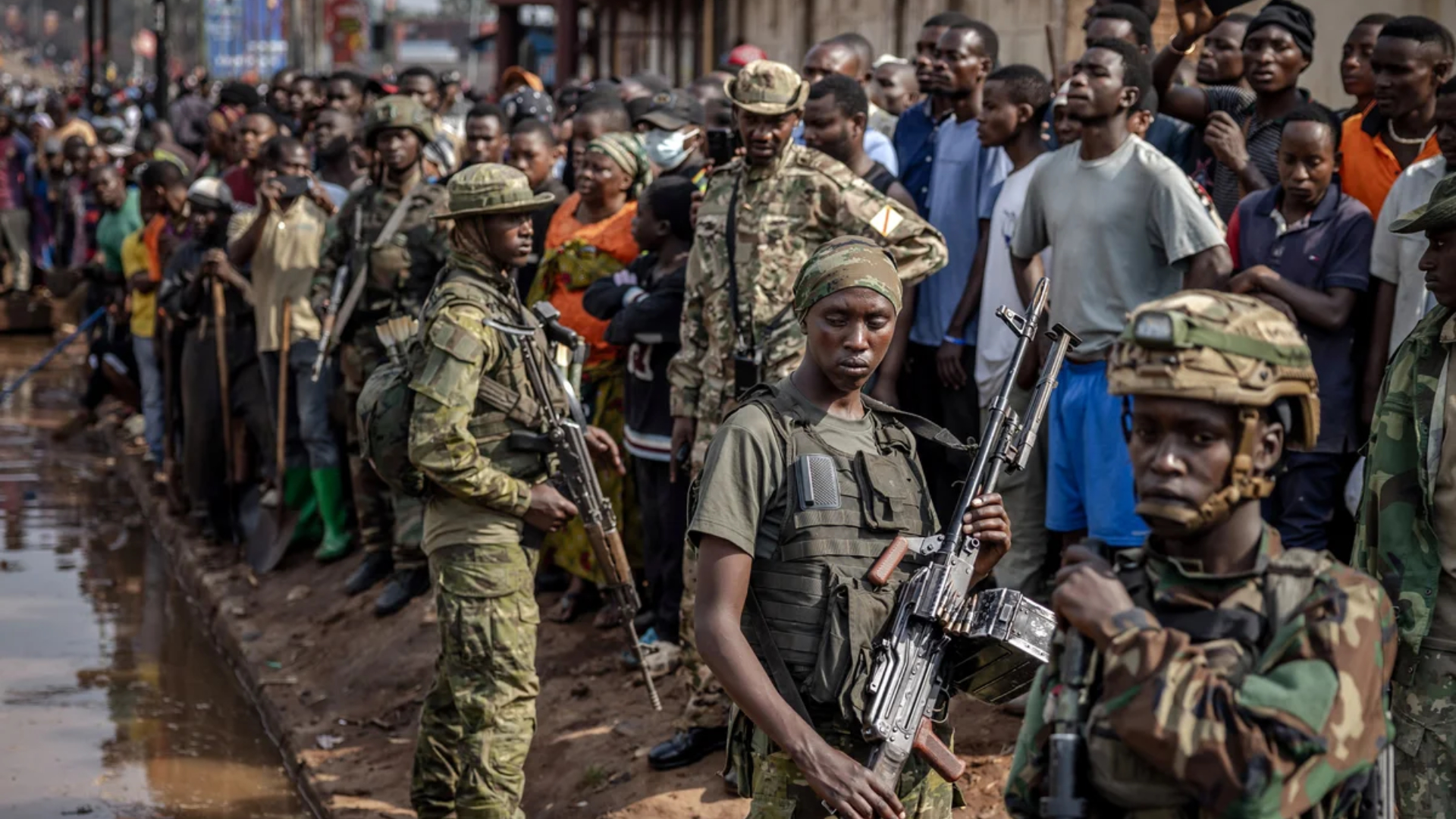
CHADEMA Chairman Tundu Lissu has told the judges hearing his treason case not to hesitate to deliver the judgment deserved for treason, if they find that the evidence presented in court proves the offence.
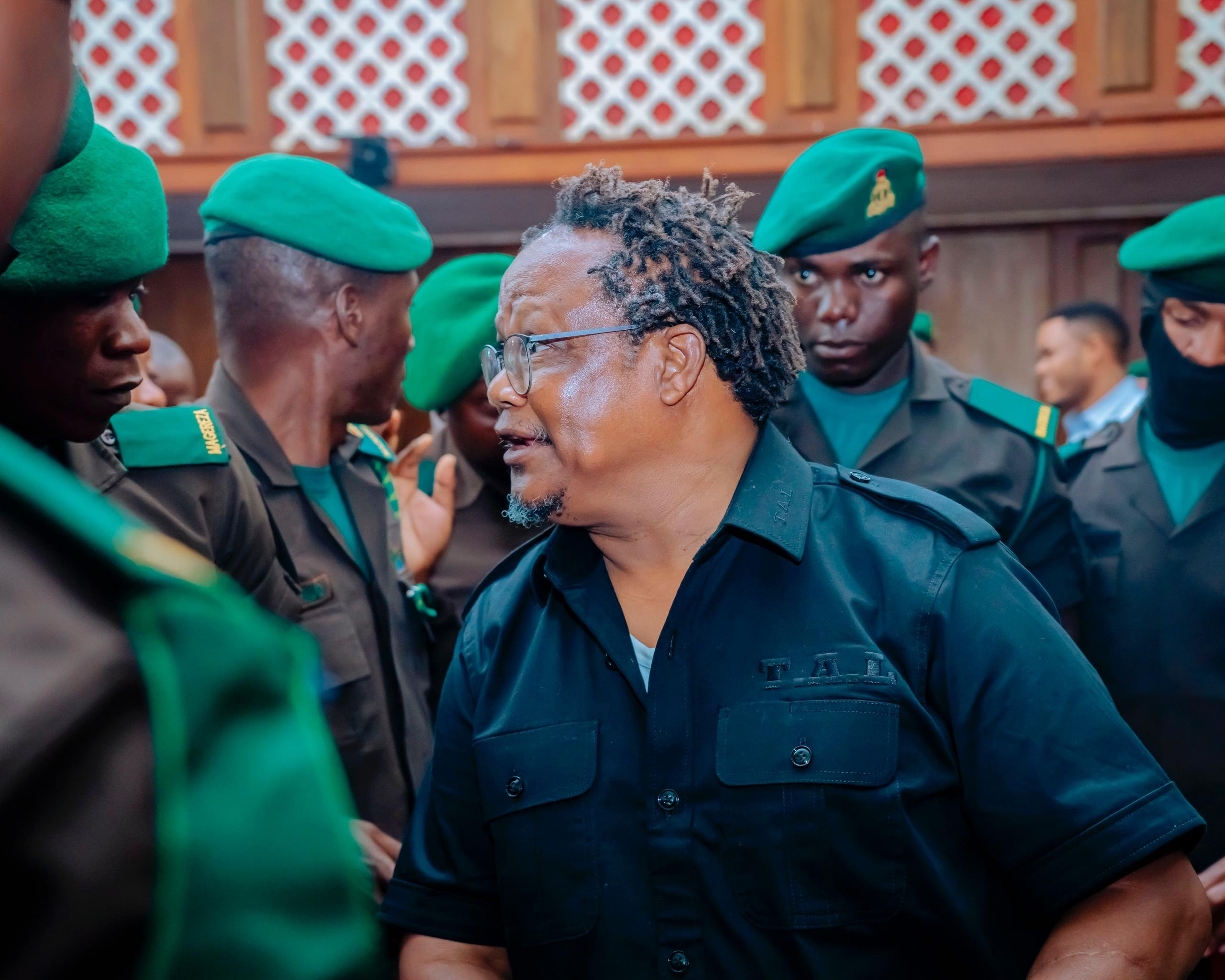
Lissu said that conversely, if the judges find that no treason has been proven, they should not be afraid to declare him not guilty, stressing that in a treason charge there is no lesser offence that an accused can be convicted of if the main charge fails.
“The offence of treason has no lesser offence. There is no offence where, if you fail to prove treason, you punish for a small offence.
The burden you carry on your shoulders is to decide whether, on this evidence, there is treason. If you see treason, do not be afraid. If you believe there is treason here, deliver the judgment that treason deserves.
And if there is no treason, do not be afraid to say the accused is not guilty. There is no lesser offence in treason, and if the evidence does not fit, discharge him. That is your burden alone,” Lissu said as he concluded his final submissions today.
The remarks came after Lissu spent much of his submissions dissecting the prosecution’s case, insisting that evidence must be looked at as a whole and also analyzed piece by piece to determine whether it proves the charge against him.
“Your Lordships, evidence must be analyzed thoroughly, each piece in detail. I have discussed the prosecution evidence in its entirety and in its parts. I have referred to the case of Nguza Viking and Oscar Lwela, and that is what I have done, My Lords.”
Lissu told the judges that the key question they should ask is how the evidence from both sides compares.
“The important question to ask is, how does this evidence compare?”
Speaking about defence witnesses, Lissu named DW1, an activist known for democracy and human rights issues, DW2, the Secretary General of CHADEMA, DW3 Amani Golugwa, DW4 Brenda Rupia, and DW5 John Wegesa Heche.
“My Lords, these are the ones who came to give evidence before you – people of substance in the politics and leadership of this country, not people in hiding, people of real substance,” he said.
He said the witnesses testified about the events of April 3, 2025, but also explained the political environment and context which, according to him, is crucial to understanding the words alleged to be treasonous.
He said the defence witnesses shared their personal experiences with politics, democracy and encounters including arrests and prosecutions.
“My Lords, all these leaders told this court what prosecution witnesses did not tell you – the context. In what environment were those words spoken, and why?”
Lissu admitted the defence witnesses had an interest in the case, but said that interest was not a reason to reject their evidence, as they wanted justice to be done for their chairman.
“Their chairman is inside, charged with treason. Which leader would see their chairman inside and have no interest? They came because they want justice and truth.”
Citing the case of Goodluck Kyando, Lissu said the Court of Appeal held that every witness deserves to have his evidence weighed, except where there are sufficient reasons to reject it.
He asked:
“My question is, between the evidence of these leaders and that of these criminals and these police officers, which evidence should the court believe?”
However, Lissu stressed he does not mean the defence evidence is flawless.
“Only before God does evidence become spotless, but here on earth it is human evidence, so flaws are inevitable.”
He gave examples of defence witnesses who were cross-examined at length and where weaknesses in some answers were exposed.
He said, however, that those flaws did not concern the core issues that determine the case. Referring to the cases of Nguza Viking, Babu Seya, Mohamed Haruna and Vitalis Joseph, Lissu argued on how the court should treat contradictions and discrepancies in evidence.
In his view, such flaws cannot discard the core evidence if the essential part remains consistent and proves the argument.
“On this evidence, there is no evidence to convict the accused; instead, there is sufficient evidence to acquit him.”
Lissu also raised what he called serious doubts about how the prosecution presented his April 3, 2025 speech. He claimed the prosecution cherry-picked some words and omitted others.
According to Lissu, the three dots in some parts of the charge sheet show that words were left out of the quote.
“Those are the words where an inattentive person will see the problem begins. Before the first word there are those three dots. They mean there were words before.”
He questioned why those words were omitted and said the court should ask what they said and why they were not included.
He said the full context of the speech could change how the complained-about words are understood.
“The defence evidence has provided the missing context – that which the prosecution did not want to be known by cherry-picking words, and it has come to light because of the defence evidence.”
He added:
“Once it is understood, these words complained of as treasonous lose the evil meaning given to them by the prosecution.”
Lissu also challenged the weight of the video evidence allegedly containing the speech, saying the prosecution promised to produce the video but never did.
He said different witnesses gave different durations for the video.
“PW17, who recorded and uploaded it, says his video is almost three hours long. Now which one should we go with? These are from the prosecution side – there are six versions, and you have not seen even one. Which version will you go with?”
He said the discrepancies raise questions about which video the court should believe.
“It is the prosecution that had the duty to prove the video. They have not proved any video.”
In another argument, Lissu challenged how the case was filed, saying some matters concerning a political party and its leaders have administrative procedures under the Office of the Registrar of Political Parties.
He said CHADEMA is a legally recognized party and matters concerning its operations and leaders should be considered under the Political Parties Act, including Section 7 which he cited in court.
After concluding, Lissu gave his final words to the judges, thanking them for giving him a chance to be heard.
“It is like this – when we started, I informed the Court that a treason case is not the President’s case, and I think even you know that, politics aside.
Despite all the difficulties of this case, you have done a good job, you have given us a chance to express ourselves, you have given me a chance to defend myself, you have been very patient, you have done a good job.
I did not want to finish without saying that. I wanted to say, perhaps we may not meet again under these circumstances – who knows tomorrow.
I wanted to finish without failing to say this, and I think the Government lawyers have fought hard. I think they deserve congratulations, and I wish them all the best.”
The case has been adjourned to tomorrow, September 29, 2026, when the Republic is expected to make its final submissions.
Lissu is facing Treason Case No. 19605 of 2025 at the High Court of Tanzania, Dar es Salaam Zone. The charge is brought under Section 39(2)(d) of the Penal Code.
The prosecution alleges that on April 3, 2025, Lissu uttered words aimed at inciting the public to prevent the 2025 General Election, including claims that he intended to “prevent the election,” “incite rebellion,” and “disrupt the election.”
Lissu was arrested on April 9, 2025, in Mbinga Town, Ruvuma Region, during CHADEMA activities involving the “No Reforms, No Election” campaign. He was arraigned at the Kisutu Resident Magistrate’s Court on April 10, 2025.