Stakeholders have renewed calls for stronger collaboration to protect Kenya’s mangrove ecosystems, saying community participation, effective partnerships and coordinated action are critical to reversing the degradation of the country’s coastal forests.
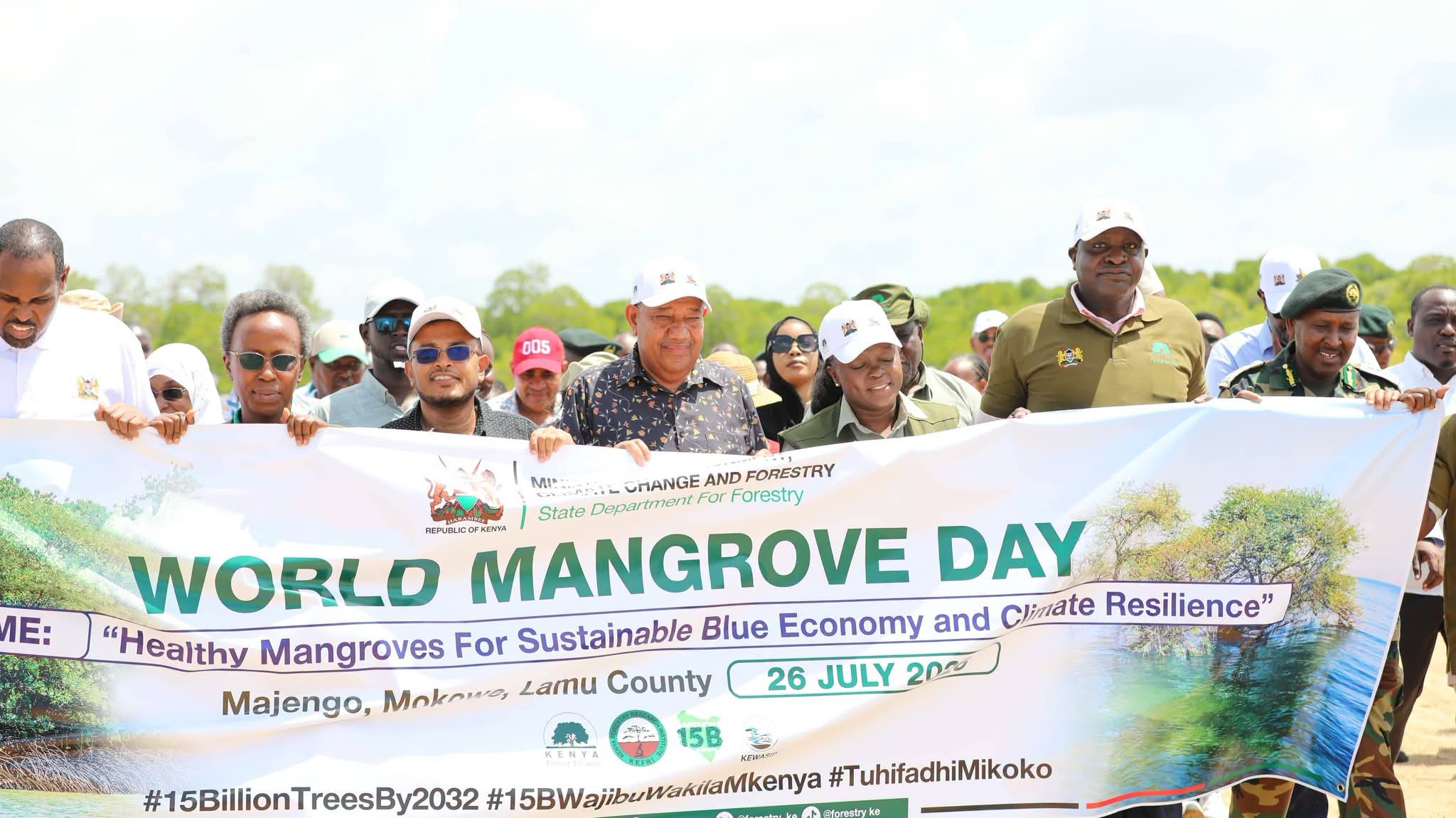
The call came during the 2026 International Day for the Conservation of the Mangrove Ecosystem celebrations held at Majengo in Mokowe, Lamu County, where government officials, researchers, conservation organisations, development partners and community representatives gathered to mark World Mangrove Day.
The event, presided over by Cabinet Secretary for Environment, Climate Change and Forestry Dr. Deborah Barasa and Lamu Governor Issa Timamy, followed a two-day National Mangrove Stakeholder Forum that brought together about 100 participants to review progress made in implementing the National Mangrove Ecosystem Management Plan (2017–2027).
Discussions centred on strengthening policy leadership, improving coordination among institutions and promoting community-led stewardship to ensure the long-term sustainability of Kenya’s mangrove ecosystems.
Participants reviewed achievements made under the current management plan while identifying key challenges affecting conservation efforts, including inadequate financing, fragmented stakeholder coordination, weak governance structures and limited community involvement in some restoration initiatives.
The forum also explored opportunities to strengthen partnerships between government agencies, research institutions, Community Forest Associations, conservation organisations, development partners and the private sector.
Participants agreed that improved coordination and sustainable financing are essential to scale up restoration programmes and support livelihoods for coastal communities.
Kenya’s mangrove forests cover approximately 61,271 hectares along the country’s 536-kilometre coastline, with Lamu County accounting for about 61 per cent of the national mangrove cover. The forests provide vital ecosystem services, including shoreline protection, carbon sequestration, biodiversity conservation and nursery grounds for fisheries that sustain thousands of households.
However, the ecosystems continue to face mounting threats from illegal harvesting, pollution, encroachment, unsustainable coastal development, reduced freshwater inflows and the effects of climate change.
According to the State Department for Forestry, Kenya loses about 0.7 per cent of its mangrove cover annually, contributing to declining fisheries production and degradation of associated marine ecosystems.
The stakeholder forum also identified the need to strengthen governance structures, enhance monitoring systems, attract private sector investment and expand community benefit-sharing models to support sustainable mangrove management.
Recommendations from the forum are expected to inform the country’s next mangrove management strategy and strengthen national efforts to conserve coastal ecosystems while advancing Kenya’s climate commitments, biodiversity targets and blue economy agenda.
The World Mangrove Day celebrations concluded with stakeholders reaffirming their commitment to working together to safeguard Kenya’s mangrove forests for future generations.