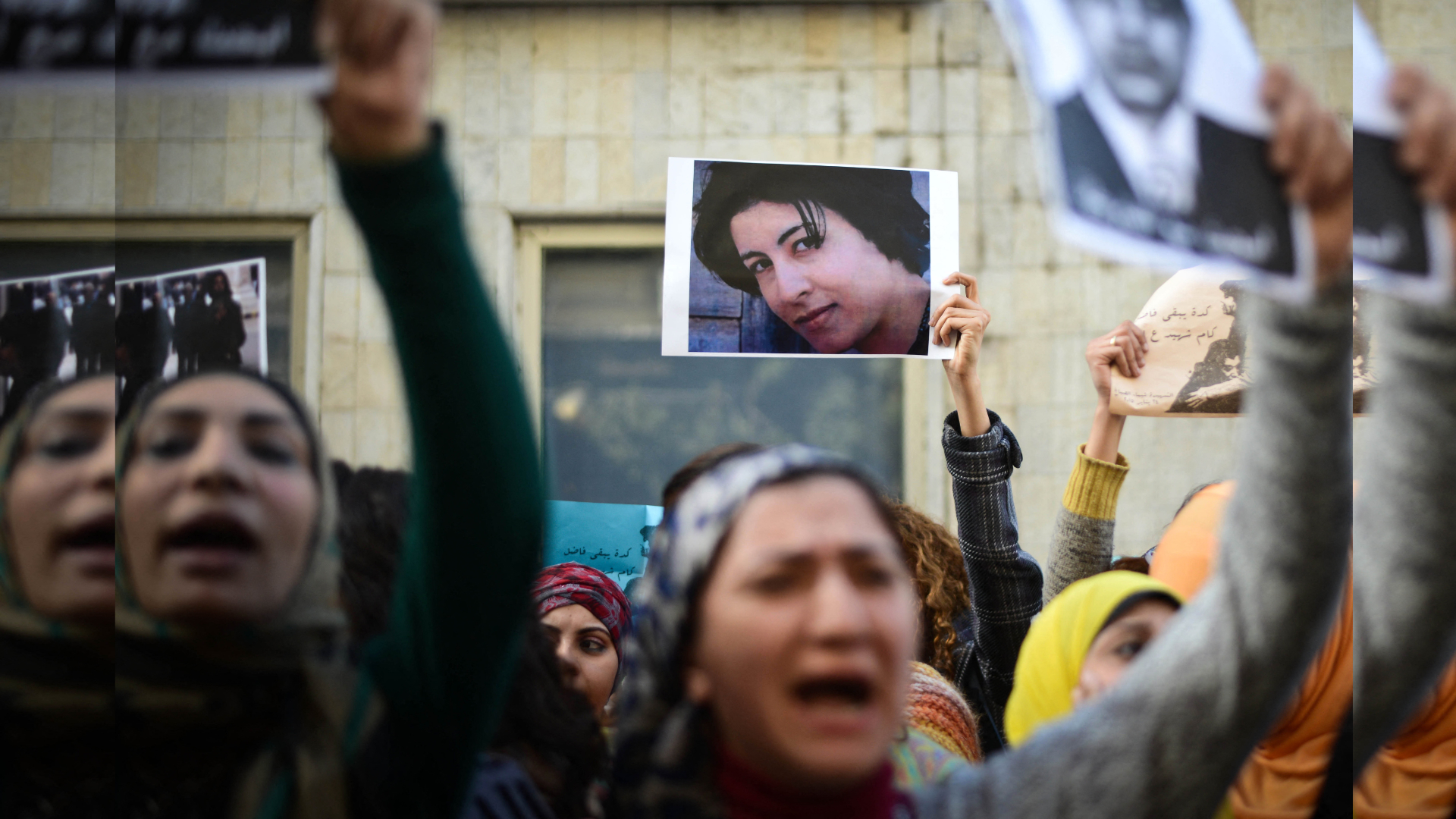
Sabbagh was killed on January 24, 2015, the eve of the fourth anniversary of Egypt’s January 25 uprising, which touched off months of demonstrations centred around Cairo’s Tahrir Square as the Arab Spring swept the Middle East.
She had just laid flowers at a memorial in Tahrir for the hundreds killed during the protests when she was shot in the back with birdshot, which was regularly used by police at the time to disperse demonstrators.
Her family had since been embroiled in a long legal battle with the Ministry of Interior, and “only received the compensation last week, though a court had ordered it in 2023”, lawyer Ali Suleiman told AFP, after repeated delays by the ministry.
The money — around 300,000 Egyptian pounds (less than $6,000) — “wasn’t the goal, rather it was to confirm that a mistake had been made by the Ministry of Interior”, Suleiman added.
Images of a bloodied Sabbagh being carried by fellow protesters trying to save her made her a symbol of Egyptian activism.
The 34-year-old mother is remembered as “the Martyr of Flowers”.
The officer who shot her received a seven-year sentence in 2020, after earlier sentences of 15 and 10 years were appealed.
The compensation is a rare admission of police wrongdoing against protesters, hundreds of whom were killed in the 2010s.
In 2011 and 2012, Egypt’s transitional government ordered mass payouts for protesters killed or injured in the 2011 uprising that ultimately toppled longtime president Hosni Mubarak.
Mubarak himself was acquitted of involvement in the killing of demonstrators in 2017.
Almost no rulings in favour of protesters have been handed down since 2014, when Egypt’s then-army chief Abdel Fattah al-Sisi became president after ousting Islamist leader Mohamed Morsi, who only served for a year following elections in 2012.
As a part of a widespread crackdown on dissent that continues today, unauthorised protests are outlawed in Egypt and exceedingly rare.
lom/bha/smw