The hearing of the Constitutional case filed by lawyers Kulwa Maduhu, Nashon Nkung and Paul Kisabo against the Prisons Authority continued on Wednesday at the High Court, where the fourth witness for the defendants gave evidence and answered questions from the questionnaire from the accused person, Tundu Lissu.
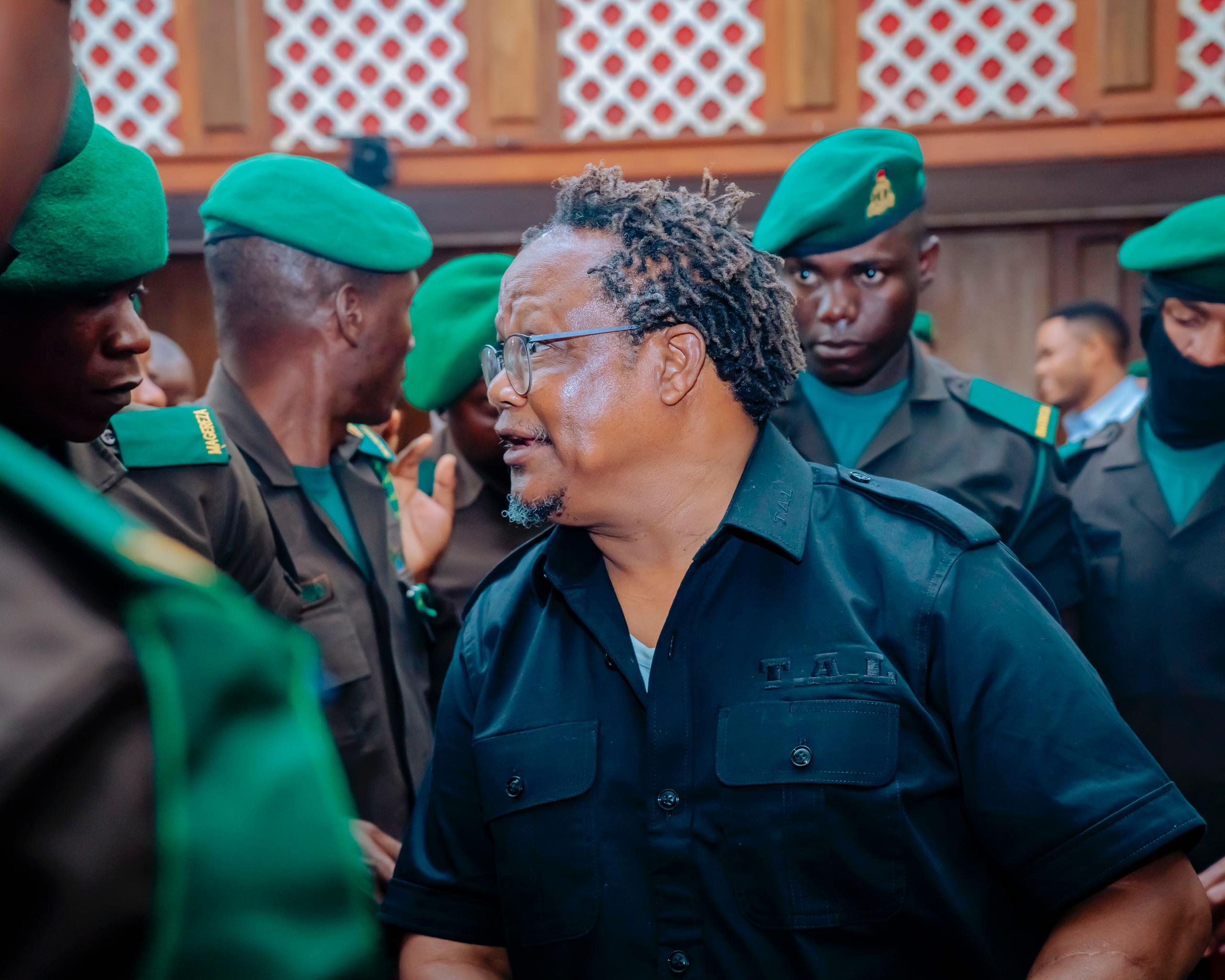
Tundu Lissu in Court
In the case, the lawyers are complaining against the Prisons Authority for allegedly preventing them from entering Ukonga Central Prison to see their client and not providing them with privacy to conduct legal discussions when they were allowed to enter the prison.
The case is being heard by a three-judge panel consisting of Judge Amir Mruma, Judge Dr. Angelo Rumisha and Judge Dr. Evaristo Longopa.
The fourth witness, Endrew Shabani Kamanyiro, 57 years old and a Christian by religion, identified himself as the Warden of Ukonga Central Prison. In his testimony, he admitted that he was the one with the authority to oversee all activities of the prison and was accountable to the Commissioner General of Prisons for the implementation of laws, regulations and the management of prisoners.
In cross-examination, Lissu focused his arguments on the authority to enact prison regulations, asking the witness to explain the difference between the Prisons Act, Prison Regulations and Prison Standing Orders (PSO). The witness agreed that Prison Regulations are enacted by the Minister responsible for Home Affairs, while PSOs are enacted by the Commissioner General of Prisons.
Lissu also guided the witness through various provisions of the Prisons Act and Prison Regulations that pertain to the rights of prisoners to be visited by relatives and their legal advisors. The witness acknowledged that the regulations recognize the right of prisoners to be visited by lawyers, and that conversations between a prisoner and a lawyer should be seen by officers but not heard.
In another part of the questionnaire, Lissu questioned the procedure used for death row prisoners, wanting to know if the law requires that their conversations be listened to by prison officials. Shahidi insisted that the regulations do not state that.
Other questions concerned the procedure for checking visitors and the documents they bring into the prison. Lissu referred to Regulation 17 of the Prison Regulations, claiming that checks should only be carried out when there is a reasonable suspicion. Shahidi, for his part, explained that according to prison procedures, everyone who enters is checked.
Lissu also questioned the claims of the presence of many prison officers during his talks with his lawyers, as well as the claims that some CHADEMA leaders were prevented from visiting him. The witness denied the claims and said he had not prevented the leaders.
In one of the most emotional exchanges in court, a witness said he could not allow some of the leaders named by Lissu to visit him until the case was over.
The statement prompted the three-judge panel leader, Justice Amiri Mruma, to ask him if there was a court order preventing the leaders from visiting. The witness replied that there was no court order, prompting the judge to continue questioning him on the basis of the decision.
Lissu went on to question whether the witness had ever filed an affidavit in court to refute the allegations made against him about barring lawyers and political leaders from visiting him. The witness admitted that he had not filed an affidavit in response to the allegations.